

Why Is Consistent Sewing Thread Quality Important for Large-Scale Clothing Production?
2026-11-19
Consistent sewing Thread quality is essential for large-scale clothing production because it directly affects seam strength, machine efficiency, garment appearance and manufacturing costs. In a factory producing thousands of garments per day, even small variations in yarn thickness, tensile performance, colour or lubrication can lead to frequent machine stops, uneven stitches and increased rejection rates. A reliable sewing material must perform consistently across different production batches, sewing lines and fabric types. For garment manufacturers, quality control is therefore not simply a matter of checking the finished product; it begins with selecting suitable materials and maintaining stable specifications throughout procurement and production.
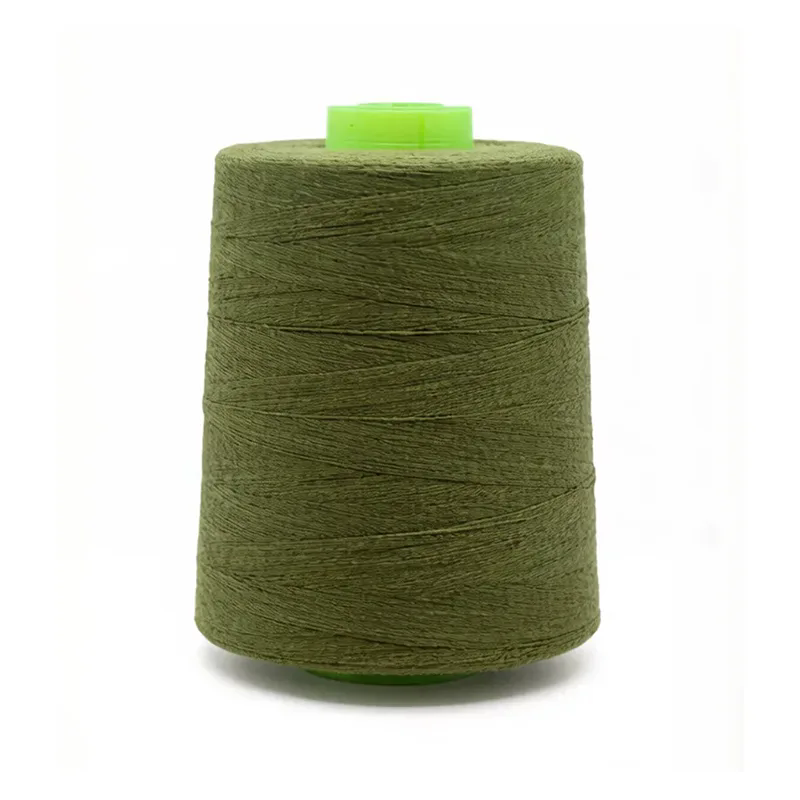
Ningbo Derusen Trading Co., Ltd. supplies polyester sewing materials for garment and textile manufacturing, including spun polyester options in Tex 18 to Tex 80, multiple count constructions, more than 800 reported colour choices and different package formats. Ring-spun and TFO production options, together with optional silicone lubrication, allow buyers to consider different manufacturing requirements. These specifications provide a practical starting point for evaluating material suitability, but each order should still be matched to the fabric, machine settings and finished garment requirements. Understanding how consistency influences factory operations helps purchasing managers, production supervisors and quality teams make better sourcing decisions.
How Does Material Consistency Affect High-Volume Garment Manufacturing?
Large-scale garment production depends on repeatable operations. A factory may use dozens or hundreds of sewing machines, with operators working across different shifts and product lines. If the sewing material changes noticeably between packages or batches, the production process becomes harder to standardise. Operators may need to adjust machine tension, replace needles more frequently or stop equipment to investigate stitching defects. These interruptions can accumulate into significant losses when production targets are tight.
One of the most important characteristics is linear density. It determines the mass per unit length and influences the overall thickness of the yarn. If linear density varies beyond an acceptable tolerance, the material may not pass through the needle eye and tension system in a consistent way. The result can be irregular stitch formation, changes in seam appearance or difficulty maintaining the approved machine settings.
Tensile performance is equally important. A garment factory needs material that can withstand the tension generated during sewing without frequent breakage. If breaking force varies significantly between batches, the same machine settings may produce different results on different production days. This creates uncertainty for line supervisors and makes it more difficult to maintain a stable output rate.
Several characteristics deserve attention during incoming inspection:
- Linear density: Confirms that the supplied count or Tex value matches the approved specification.
- Breaking force: Helps determine whether the material can withstand the expected sewing tension.
- Elongation: Indicates how much the yarn extends before breaking and can influence seam behaviour.
- Twist consistency: Supports uniform yarn construction and predictable handling.
- Surface condition: Helps identify excessive hairiness, visible defects or irregularities that may affect machine performance.
- Package winding: Influences unwinding stability and the consistency of material delivery to the machine.
- Colour consistency: Reduces visible differences between garment panels and production batches.
These properties work together. A product may meet the nominal count requirement but still create production problems if its winding, finish or tensile performance is unsuitable. Incoming inspection should therefore evaluate the complete specification rather than relying on a single measurement.
Consider a factory producing several thousand shirts in one order. If one batch of material has a different shade from the approved sample, the variation may become visible between collars, cuffs and body panels. If another batch has unstable unwinding behaviour, operators may experience repeated breaks or inconsistent stitch tension. Both problems can lead to rework, delayed packing and additional quality checks. The cost is not limited to the material itself; it includes machine downtime, labour, production scheduling and the risk of missing delivery dates.
Consistency also supports production planning. When the material specification remains stable, supervisors can establish standard machine settings for each fabric and sewing operation. Operators spend less time correcting avoidable variations, while quality teams can compare production results against a reliable reference. This makes it easier to identify whether a defect originates from the material, the machine, the needle, the fabric or the operator's technique.
Our purchasing process should therefore use approved samples and written specifications as the basis for repeat orders. A clear specification can include count, construction, colour reference, package format, finish and required mechanical properties. Derusen can be evaluated against these requirements through sample approval and product documentation before large-volume purchasing begins.
Why Do Yarn Specifications and Finishing Matter on Automated Sewing Lines?
Automated and semi-automated sewing lines place consistent demands on the material. High-speed machines rely on stable unwinding, predictable tension and suitable lubrication to maintain stitch formation. Even on conventional industrial sewing equipment, a change in surface friction or package winding can affect how the yarn moves through guides, tension discs and the needle eye. These factors become more noticeable when machines operate for long shifts or process multiple garment styles.
Polyester is widely used in apparel manufacturing because it offers a practical combination of durability, dimensional stability and versatility. However, not every polyester product has the same construction or performance. Spun polyester, for example, is made from staple fibres twisted together, while continuous-filament polyester uses long fibres. The two constructions can differ in surface appearance, handling and sewing behaviour. Buyers should choose according to the garment design and production conditions rather than assuming that all polyester products are interchangeable.
DERUSEN's available spun polyester range covers Tex 18 to Tex 80. Common count combinations include 20/2, 20/3, 20/6, 20/9, 30/2, 30/3, 40/2, 40/3, 50/2, 50/3, 60/2 and 60/3. These options allow buyers to consider different material weights and sewing requirements. The correct selection depends on fabric thickness, seam construction, needle size, stitch density and the desired appearance of the finished garment.
| Product specification | Available information | Production relevance |
| Material category | Spun polyester | Suitable for evaluating general apparel and textile sewing applications. |
| Linear density | Tex 18 to Tex 80 | Helps match material thickness to fabric and seam requirements. |
| Common count combinations | 20/2 to 60/3, including multiple intermediate constructions | Provides options for different sewing operations and garment structures. |
| Production methods | Ring-spun and TFO options | Allows buyers to compare yarn construction and twisting requirements. |
| Colour selection | More than 800 reported colour options | Supports colour coordination across different garment collections. |
| Lubrication | Optional silicone lubrication | Can be considered when friction and machine running conditions require a suitable finish. |
| Large cone packaging | 1,000 to 20,000 yards or 1 to 2 kg, subject to specification | Can support longer production runs and different purchasing requirements. |
| Small bobbin packaging | 50 to 1,000 yards | Can be considered for smaller operations and specific sewing applications. |
| Quality considerations | Count, tensile performance, winding, knots and colour consistency | Provides inspection points for incoming material and batch approval. |
The production method can influence yarn characteristics. Ring spinning and TFO twisting are different manufacturing approaches, and the finished results should be assessed through the actual product specification. Buyers should not assume that one method is automatically suitable for every garment. What matters is whether the supplied construction meets the required count, strength, appearance and machine-running conditions.
Finishing is another important consideration. Lubrication can influence friction as the yarn passes through the sewing machine. A suitable finish may help maintain stable movement under the specified operating conditions, while an unsuitable or excessive finish may create problems in downstream processes. The required finish should be agreed with the supplier based on the intended application, particularly when garments will undergo washing, dyeing, printing or other finishing operations after sewing.
For large factories, package format also has a direct operational impact. Larger cones may reduce the frequency of package changes on suitable production lines, while smaller bobbins may be more appropriate for particular equipment or sewing tasks. Package weight and winding length should be confirmed for the selected count. Buyers should also consider whether the package unwinds evenly throughout its usable length, rather than assessing only its appearance when first opened.
Our technical evaluation should include a controlled machine trial. Use the intended fabric, needle, stitch type and operating speed, then record the machine settings and results. Check whether the material feeds consistently, whether stitches remain balanced and whether breakage occurs during a meaningful production period. A short trial can identify obvious problems, but a longer test provides a more realistic view of performance during normal factory operation.
Quality teams should also assess the finished seam after relevant garment processes. Washing, pressing and heat exposure may influence the appearance and stability of the completed product. The material should be tested under conditions that reflect the actual production route, especially for garments with strict appearance or durability requirements.
How Can Manufacturers Control Quality Across Different Production Batches?
Stable production requires a quality-control system that connects supplier approval, incoming inspection, machine trials and finished-garment evaluation. Relying on visual checks alone is not enough. Some variations are difficult to identify by sight but can affect machine performance after several hours of continuous operation. A structured inspection process helps manufacturers detect problems before the material is distributed across multiple sewing lines.
The first stage is supplier and product approval. Before placing a large order, purchasing teams should request a technical data sheet, samples and clear product identification. The approved sample should be retained as a reference for future deliveries. If the product specification changes, the supplier should communicate the change so that the factory can determine whether another production trial is necessary.
A practical incoming inspection plan can include the following stages:
- Document verification: Compare the delivery details with the purchase order, including count, construction, colour and package format.
- Package inspection: Check for damage, contamination, incorrect labelling and visible winding irregularities.
- Sample testing: Measure relevant properties such as linear density and breaking force according to the factory's approved methods.
- Colour comparison: Compare the supplied material with the approved shade reference under consistent lighting conditions.
- Machine trial: Test selected packages using the intended machine settings and fabric.
- Batch release: Distribute the material to production only after the relevant checks have been completed.
- Production monitoring: Record machine stops, breakage frequency, defects and any adjustments made during operation.
Batch traceability is particularly valuable for factories handling repeat orders. Each delivery should be identifiable by product specification, colour reference, lot or batch information and receiving date. If a problem appears in finished garments, the factory can trace the affected material and determine whether the issue is isolated or widespread. Without traceability, it becomes harder to identify the source of a defect and prevent it from recurring.
Colour management deserves particular attention in clothing production. A difference that appears minor on a cone may become obvious when the material is stitched into a garment and viewed beside the fabric under retail lighting. Buyers should use physical shade standards and define acceptable variation. Where a garment contains several panels or components, the factory should also consider whether all material used in the same finished product comes from compatible colour batches.
Mechanical testing should be equally systematic. Breaking force and elongation are useful indicators, but the test method, conditioning environment and sample preparation must remain consistent if results are to be compared between batches. A test result without a defined method may create confusion rather than improve control. Factories should also avoid using a single tensile value as a substitute for actual sewing performance.
Our factory assessment should consider the supplier's ability to maintain repeatable production specifications, inspect finished packages and respond to quality concerns. DERUSEN's supplied product information includes a stated quality-control target of no knots over 10,000 metres. This figure should be confirmed for the selected product and batch, including the inspection method and acceptance criteria. Buyers with strict production requirements should request supporting information rather than assuming that a general target applies equally to every count and colour.
The supplied product information also describes dyes formulated without azo compounds and formaldehyde. For buyers serving markets with restricted-substance requirements, current test reports and product-specific compliance documentation should be requested. A general material statement is not a replacement for evidence covering the actual product, colour and relevant regulatory requirements.
Quality consistency also depends on communication between the supplier and the garment factory. If a count, colour, finish or package specification needs to change, the purchasing team should receive the information before the material enters production. This allows the factory to evaluate the change, update machine settings where necessary and protect the consistency of garments already in progress.
What Should Buyers Consider When Choosing a Long-Term Sewing Material Supplier?
Price is an important purchasing factor, but it should be assessed alongside production reliability. A lower unit price may not deliver the best overall value if the material causes frequent machine stops, higher rejection rates or additional inspection work. For large-volume garment manufacturers, the more useful comparison is the total cost of using the material throughout production.
Supplier evaluation should cover several practical areas:
- Specification transparency: Can the supplier provide clear information about count, construction, colour, finish and package options?
- Sample approval: Can production samples be supplied for machine testing before a bulk order?
- Batch consistency: Are inspection procedures and product identification maintained across repeat orders?
- Colour management: Can the supplier work with approved shade references and explain its colour-control process?
- Packaging flexibility: Are cone weights, winding lengths and bobbin formats suitable for the buyer's equipment?
- Technical communication: Can the supplier respond clearly to questions about yarn construction and performance?
- Documentation: Are relevant test reports and compliance documents available for the specified product?
- Order planning: Can supply arrangements support the factory's production schedule and repeat purchasing requirements?
It is also useful to compare suppliers using a consistent evaluation sheet. Each candidate should be assessed against the same product specification, testing conditions and acceptance criteria. This prevents purchasing decisions from being influenced by differences in quotation format or incomplete technical descriptions. Where two suppliers offer similar products, the ability to maintain approved specifications over repeat orders may be more valuable than a small initial price difference.
For large clothing manufacturers, a long-term supply relationship should support predictable material planning. This includes clear communication about product availability, colour references, packaging changes and specification updates. It also requires a process for handling non-conforming deliveries. A supplier should be able to identify the product involved, review the reported issue and provide information that helps the buyer determine the next action.
Ningbo Derusen Trading Co., Ltd. offers spun polyester options with multiple counts, colour choices and package formats for different textile manufacturing requirements. Buyers should confirm the exact specifications, sample availability and order conditions for their intended product. A detailed discussion about fabric type, machine configuration, target output and required seam performance can help establish whether a proposed material is appropriate before large-scale purchasing begins.
Conclusion
Consistent material quality is a foundation of efficient large-scale clothing production. Stable linear density, tensile performance, colour, twist, lubrication and package winding help factories maintain reliable machine settings, reduce avoidable downtime and produce garments with consistent seam appearance. A structured approach to supplier approval, incoming inspection, production trials and batch traceability makes it easier to identify variations before they affect finished orders.
Ningbo Derusen Trading Co., Ltd. provides spun polyester products in Tex 18 to Tex 80, with multiple count constructions, more than 800 reported colour options, ring-spun and TFO choices, optional silicone lubrication and different package formats. Contact our team with your fabric specifications, sewing requirements and expected order volume to request product details and samples. Our team can help you assess suitable options and establish a material specification that supports stable, repeatable garment production.
Frequently Asked Questions
1. Which sewing material properties have the greatest influence on large-scale garment production?
Linear density, breaking force, elongation, twist consistency, surface condition, colour stability and package winding are among the most important properties. Linear density affects material thickness and compatibility with the needle and seam design, while tensile performance influences resistance to breakage during sewing. Colour and package consistency help maintain a uniform finished appearance and stable machine operation. Manufacturers should assess these properties together because a product that meets one specification may still be unsuitable if its other characteristics do not match the production process.
2. How can a clothing factory reduce sewing defects caused by inconsistent material batches?
A factory can reduce these defects by approving a reference sample, defining written product specifications, inspecting incoming deliveries and conducting machine trials before releasing new batches to production. The inspection plan should cover count, colour, package condition and relevant mechanical properties. During production, supervisors should record breakage, tension adjustments, stitch defects and machine stops. Batch traceability then helps identify affected deliveries and supports corrective action when a recurring problem is detected.
3. What information should buyers request before placing a bulk order for polyester sewing material?
Buyers should request the exact material construction, Tex or count, ply, colour reference, breaking force, elongation, twist information, lubrication details and package format. They should also confirm the applicable test methods, product tolerances, sample approval process and available quality documentation. If the material will be used in a high-volume production line, a machine trial with the intended fabric and settings should be completed before bulk approval. These steps help ensure that the delivered product matches the factory's technical and operational requirements.