
Why Does the Right Knitting Yarn Matter More Than Most Buyers Expect?
2026-04-08
When I evaluate yarn options for apparel, accessories, and everyday textile production, I always look beyond color and price first. That is exactly why I pay close attention to suppliers like Cai Kingdom Group Co., Limited, because a dependable yarn partner can influence product feel, machine efficiency, order consistency, and long-term cost control at the same time. In many real sourcing situations, choosing the right Knitting Yarn is not a minor material decision at all. It is a practical business decision that shapes fabric quality, delivery confidence, and customer satisfaction from the first sample to the final shipment.
For many buyers, the challenge is not finding yarn on the market. The real challenge is finding yarn that runs smoothly in production, holds color well, feels right in finished products, and arrives with stable specifications batch after batch. I have seen how delays, uneven yarn count, weak tensile performance, and poor blending balance can create expensive downstream problems. That is why I think a smarter buying process starts with understanding what makes a yarn truly usable, not just technically available.
What Problems Do Buyers Usually Face When Choosing Yarn?
I often notice that buyers run into the same set of problems, especially when they are comparing multiple suppliers too quickly or focusing only on headline pricing. A yarn may look attractive on paper, but once it enters production, hidden issues begin to appear.
- Inconsistent count that affects knitting performance and fabric appearance
- Unstable blending that changes hand feel across different lots
- Weak strength that increases breakage during processing
- Limited color availability that slows product development
- Slow delivery that disrupts seasonal or volume-based orders
- Packaging or labeling that does not fit warehouse or export needs
When I help assess a supplier, I look at how well the material fits real manufacturing needs instead of broad sales language. A good yarn should reduce friction, not create more of it. That is where a reliable Knitting Yarn supplier can stand apart from a trader that only competes on price for the first order.
How Can I Tell Whether a Yarn Is Suitable for Real Production?
I prefer to judge yarn by practical performance rather than slogans. If I am buying for knitwear, T-shirts, socks, scarves, or other textile products, I want to know whether the yarn can balance softness, strength, process stability, and cost in a realistic way. That balance matters much more than a polished catalog description.
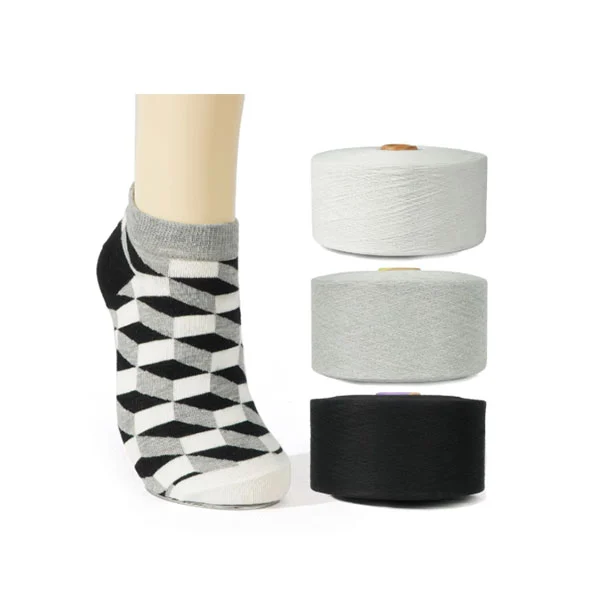
A strong option in today’s market is blended yarn designed to improve usability across different applications. When recycled cotton and polyester are combined carefully, the result can offer a useful mix of comfort, wear resistance, and production adaptability. In my view, this is one of the reasons why buyers keep returning to well-made Knitting Yarn for both large-volume and flexible manufacturing programs.
| Buying Concern | What I Check | Why It Matters |
|---|---|---|
| Yarn Count Stability | Whether the yarn stays consistent across lots | Helps maintain smooth knitting and cleaner fabric appearance |
| Fiber Blend | How cotton and polyester are balanced | Affects softness, durability, moisture behavior, and cost |
| Strength | Whether the yarn performs well during processing | Reduces breakage and downtime |
| Color Availability | Stock colors and customization flexibility | Speeds development and supports branding needs |
| Packaging | Tube, bag, carton, pallet, and labeling options | Improves logistics efficiency and warehouse handling |
| Supply Capacity | Production scale and export handling ability | Supports repeated orders and large-volume planning |
Why Do Material Blends Make Such a Big Difference?
I do not believe buyers should think of blended yarn as a compromise. In many cases, it is actually the more practical answer. A well-designed cotton and polyester blend can help bridge the gap between comfort and performance. Cotton contributes a softer touch and better moisture handling, while polyester improves wear resistance, structure, and durability.
That combination is especially helpful when the yarn will be used in products that need everyday practicality as well as acceptable feel. If I am sourcing for items that require repeated production runs, I want a material that does not force me to choose between comfort and efficiency. A dependable Knitting Yarn blend gives me more room to meet different market demands without constantly changing sourcing strategy.
I also value flexibility in specifications. Different counts, compositions, and package forms make it easier to adapt the yarn to actual machine settings and end-use requirements. That kind of flexibility saves time in sampling and reduces the risk of buying material that looks good online but performs poorly in the workshop.
Why Should I Care About Supply Stability As Much As Yarn Quality?
Because quality without continuity is not enough. I have seen buyers approve a sample, move forward with confidence, and then run into trouble when a later batch does not match the first. That breaks trust fast. So when I assess a yarn source, I also want to know whether the supplier can maintain regular output, predictable lead times, and stable order handling.
For buyers working with repeat styles or export-facing production plans, supply stability affects more than inventory. It affects planning accuracy, labor scheduling, customer commitments, and cash flow. A supplier with established manufacturing experience, export familiarity, and consistent production organization usually offers more than product. They offer operational reassurance.
That is one reason I pay attention to companies with both manufacturing and trade experience. When a supplier understands production and international order requirements together, communication tends to be more direct, packaging options tend to be more useful, and problem solving tends to happen faster.
What Advantages Can Help Buyers Lower Risk Without Sacrificing Results?
When I compare yarn sources, I usually prioritize advantages that solve real buying pressure. These are the points that matter most to me:
- Stable and practical fiber blends that support different textile uses
- Broad color choices for faster design response
- Specification customization for varied machine and fabric requirements
- Scalable output for bulk orders and repeat procurement
- Export-ready packing and marking options
- Clear communication that helps speed up inquiry-to-order decisions
These are not small details. They are often the difference between a smooth buying experience and a frustrating one. A good Knitting Yarn supplier makes it easier for me to control production risks before they become quality claims, delivery delays, or avoidable cost increases.
How Do I Match Yarn Choice to End Products More Effectively?
I like to start with the final product instead of the yarn itself. That sounds simple, but many sourcing mistakes happen because buyers focus on generic yarn descriptions without thinking through the finished application. Different products place different demands on yarn behavior.
| End Product | What I Focus On | Why the Yarn Choice Matters |
|---|---|---|
| Knitwear | Softness, appearance, and consistency | Helps create wearable, comfortable fabric with a stable look |
| T-Shirts | Breathability, durability, and cost balance | Supports large-volume production and daily wear performance |
| Socks | Strength and repeated-use resistance | Reduces wear issues and helps maintain shape in use |
| Scarves | Hand feel and color presentation | Improves customer perception and retail appeal |
| General Textile Fabric | Machine compatibility and stable supply | Supports production efficiency and repeat orders |
When I work from the finished product backward, I can ask better questions and choose a more suitable Knitting Yarn instead of just accepting a standard option that may or may not fit.
Why Is Cost Control About More Than the Lowest Price?
I think this is where many buyers get trapped. A lower unit price does not always mean lower total cost. If yarn inconsistency causes rework, machine stoppage, waste, shade differences, or customer complaints, the initial savings disappear quickly. I would rather buy yarn that performs steadily than save a little on paper and lose much more during production.
Real cost control comes from the full picture:
- Fewer breakages during processing
- More consistent fabric output
- Lower risk of returns or complaints
- Better predictability for repeat orders
- Less time lost in adjusting materials between batches
That is why I often see value in yarn programs that combine practical pricing with stable quality and customizable options. Buyers do not just need affordability. They need materials that behave reliably in the real world.
What Should I Ask Before Sending an Inquiry?
If I want to move faster and make a better decision, I ask direct and useful questions early. That helps me understand whether the supplier can actually support my business rather than simply offer a quote.
- Which counts and blend ratios are available for my intended application?
- Can colors be selected from stock or customized for my order?
- What packaging methods are available for export and warehouse handling?
- How is lot-to-lot consistency managed?
- What order volume can be supported for repeat shipments?
- Can the supplier adapt specifications to different machine or fabric needs?
These questions give me a clearer view of whether the supplier can support long-term cooperation. A strong answer is not just about technical data. It is about responsiveness, clarity, and evidence of real production understanding.
Why Might This Be the Right Time to Upgrade My Yarn Sourcing Strategy?
Markets change quickly, and buyer expectations are getting sharper. Today, I need sourcing partners that can help me balance quality, flexibility, price, and speed all at once. If my current supply chain is causing repeated sampling delays, inconsistent product feel, or avoidable procurement stress, then it may be time to reassess what I am buying and who I am buying it from.
Choosing the right Knitting Yarn is not just about filling a purchase order. It is about building a stronger foundation for textile quality, manufacturing stability, and buyer confidence. If you are looking for a yarn solution that supports knitting and textile applications with practical specification options, dependable supply, and a more efficient inquiry process, this is the kind of sourcing conversation worth having now.
If you want to discuss your product requirements, compare suitable yarn options, or request details for your next order, contact us today. I recommend reaching out to Cai Kingdom Group Co., Limited to explore the right Knitting Yarn solution for your business and leave your inquiry while your current sourcing needs are still in motion.