
Why Does Choosing the Right Sock Yarn Matter More Than Most Buyers Expect?
2026-03-20
When I look at what makes a sock line succeed in real production, I do not start with packaging or price alone. I start with the yarn, because poor yarn quality shows up fast in knitting efficiency, fabric feel, color consistency, and end-user complaints. That is why I want to talk about Sock Yarn through a practical sourcing lens. Over the years, I have seen how manufacturers like Cai Kingdom Group Co., Limited gradually become part of serious buyers’ consideration when the focus shifts from low headline cost to stable output, customizable blends, and dependable supply. In that context, a well-made Sock Yarn is not just a material choice. It is a production decision that affects quality, waste, delivery performance, and customer satisfaction.
What Problems Do Buyers Usually Face When They Source Sock Yarn?
Many buyers do not struggle because they cannot find yarn suppliers. They struggle because too many options look similar on paper while performing very differently in production. I often see the same pain points appear again and again.
- Uneven yarn that creates unstable knitting performance
- Harsh hand feel that reduces wearing comfort
- Inconsistent color from batch to batch
- Weak strength that increases breakage during knitting
- Contamination issues that affect the final appearance of socks
- Long lead times that disrupt seasonal orders
- Limited flexibility when buyers need custom blends or counts
If I am buying yarn for sport socks, casual socks, uniform socks, or promotional sock programs, I need more than a good-looking sample cone. I need confidence that the yarn can stay stable when the order volume rises. That is exactly where the right Sock Yarn starts to separate itself from cheaper but riskier alternatives.
How Can I Tell Whether a Sock Yarn Supplier Really Understands Production Needs?
I always judge a supplier by how well they understand the factory floor, not just by how well they describe their products. A supplier that understands real production usually pays attention to the following details.
- They talk about evenness because they know knitting stoppages cost money
- They focus on soft touch because socks are worn close to the skin
- They control contamination because appearance matters in light colors
- They offer regular counts and custom options because different sock programs require different structures
- They support color customization because branding and retail positioning depend on it
- They manage delivery schedules because delayed yarn can delay an entire shipment
From my perspective, this is where a supplier becomes more than a seller. They become a production partner. If I am sourcing for ongoing orders rather than one trial run, that difference matters a lot.
Why Does Fiber Blend Flexibility Make Sock Yarn More Valuable?
Not every sock needs the same yarn structure. Some buyers need a blend that balances softness and durability. Others want a more economical composition without losing too much performance. That is why blend flexibility is one of the strongest advantages in commercial yarn sourcing.
A supplier that can support customized cotton and polyester ratios gives me more room to match yarn to my target market. If I am producing basic daily socks, I may prioritize cost efficiency and durability. If I am producing a softer retail line, I may care more about touch and comfort. Good Sock Yarn should support those decisions instead of forcing me into a single standard formula.
| Buying Need | What I Usually Look For | Why It Matters |
|---|---|---|
| Comfort-focused socks | Softer touch and balanced blend | Improves wearing experience and customer satisfaction |
| High-volume basic socks | Stable quality and cost control | Supports margin and repeat production |
| Sports socks | Good strength and consistent structure | Helps performance during knitting and daily use |
| Private label orders | Custom colors and suitable count options | Supports brand differentiation |
| Fast replenishment orders | Ready stock for common colors and counts | Shortens delivery pressure |
What Makes Consistent Color So Important in Sock Yarn?
Color consistency is one of those things buyers only fully appreciate after a problem happens. If the white is not clean enough, if black varies between lots, or if contamination appears in the final knit, the socks immediately look lower grade. That is especially risky for sport socks and plain socks, where visual cleanliness matters.
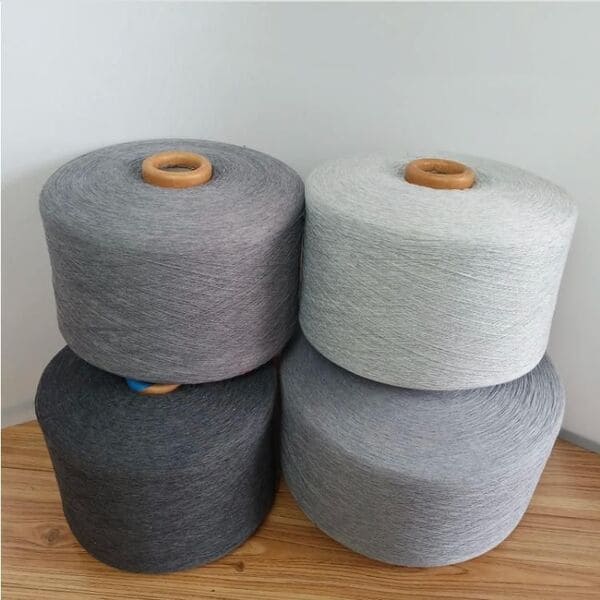
When I assess a yarn supplier, I pay close attention to their ability to maintain stable shades in popular colors such as optical white, black, grey, and charcoal. Reliable color control does not just help with appearance. It reduces sorting issues, lowers rejection rates, and protects the buyer’s brand image in the market.
This is one reason a dependable Sock Yarn supply can create value beyond the material itself. It protects consistency across multiple production cycles, which is exactly what repeat buyers need.
How Do Yarn Evenness and Tenacity Affect Knitting Efficiency?
From a sourcing standpoint, yarn quality is not only about how the finished sock feels. It also affects how efficiently the yarn runs on the machine. If the yarn lacks evenness, knitting becomes less stable. If tenacity is weak, breakage increases. Once that happens, the hidden cost of cheap yarn starts to show.
I usually think about production impact in three layers.
- Machine performance improves when yarn runs more smoothly
- Waste can be reduced when there is less breakage and fewer defects
- Finished socks look more uniform when the yarn structure stays consistent
That is why I do not treat Sock Yarn as a commodity purchase only. It directly affects labor efficiency, machine uptime, and total production cost. A lower unit price may look attractive at first, but unstable yarn often becomes more expensive after real factory use.
Why Do Count Options and Customization Matter for Serious Buyers?
Different sock constructions require different count selections, and serious buyers rarely want a one-size-fits-all solution. When a supplier can support multiple counts and adapt blends or colors to actual demand, sourcing becomes much easier to manage.
I see customization as an advantage in several situations.
- When a buyer serves different regional markets with different product expectations
- When a factory needs a specific yarn count to match machine settings
- When a brand wants exclusive color development
- When a buyer needs to balance performance goals with target pricing
This is where supplier flexibility becomes commercially useful. A capable Sock Yarn manufacturer is not simply offering cones on a shelf. They are helping buyers build a more suitable product line.
Can Fast Delivery and Practical Packaging Improve the Buying Experience?
Yes, and I would say more than many buyers first realize. Lead time matters because sock orders are often tied to seasonal demand, retail timelines, or promotional schedules. If regular colors or commonly used counts are available faster, I gain more control over my own delivery commitments.
Packaging also matters because it affects storage, handling, and shipment safety. Whether the yarn is packed in bags, cartons, or pallets, practical export-ready packaging reduces friction in logistics. For international buyers, details like departure ports, sample support, and standard payment arrangements can also make supplier coordination much easier.
| Supply Factor | Why I Care About It | Business Impact |
|---|---|---|
| Lead time | Keeps production on schedule | Helps avoid shipment delays |
| Ready stock for regular colors | Supports urgent orders | Improves responsiveness to market demand |
| Custom color support | Matches buyer branding needs | Strengthens product differentiation |
| Sample availability | Allows testing before large orders | Reduces sourcing risk |
| Export-friendly packing | Protects yarn in transit | Improves logistics efficiency |
Why Should I Compare Total Value Instead of Only Comparing Price?
This is probably the biggest sourcing mistake I see. A lower quotation may seem attractive, but it does not automatically mean lower cost in real business terms. If the yarn causes machine stops, quality complaints, shade inconsistency, or delivery delays, the actual cost becomes much higher.
When I compare suppliers, I prefer to evaluate total value, including the following points.
- How stable the yarn performs in knitting
- How consistent the color and appearance remain
- How flexible the supplier is with counts, blends, and colors
- How fast the supplier can respond to repeat or urgent orders
- How confidently the supplier supports long-term cooperation
That is why a professional Sock Yarn sourcing decision should never be based on unit price alone. Long-term buyers usually care more about continuity, predictability, and end-product performance, because those are the factors that support repeat sales.
What Should I Look For If I Want a Reliable Long-Term Sock Yarn Partner?
If I am choosing a supplier for long-term cooperation, I want to see a practical balance of production capacity, customization ability, stable quality, and responsive service. I am not only buying yarn for one shipment. I am building a supply relationship that should help my business grow with fewer disruptions.
In that sense, the right partner should be able to offer:
- Consistent yarn quality across repeat orders
- Blend and count options for different sock applications
- Clean, commercially useful color development
- Dependable supply for standard and custom demand
- Clear communication during sampling, ordering, and delivery
For buyers who want to reduce sourcing uncertainty while improving sock quality, these advantages can make all the difference. A strong Sock Yarn supplier helps me protect quality, save production time, and serve my market more confidently.
Are You Ready to Source Better Sock Yarn for Your Next Order?
If you are looking for a more dependable way to improve sock quality, reduce production risk, and secure flexible supply, now is the right time to act. I believe the best sourcing decisions come from clear communication, practical samples, and a supplier that understands what real buyers need. If you want to explore customized blends, counts, colors, or regular stock options, please contact us today and send your inquiry. Let us help you find the right Sock Yarn solution for your market, your machines, and your next shipment.