
Which Tenacity Twisted PP Yarn Meets Industrial Strength Requirements?
2026-11-13
Choosing the right Tenacity Twisted PP Yarn is essential for manufacturers who depend on consistent tensile strength, stable processing performance, and long-lasting finished products. From industrial ropes and lifting slings to webbing, shoelaces, and elastic cords, the quality of polypropylene yarn directly influences production efficiency and final product reliability.
This guide explains how Tenacity Twisted PP Yarn is manufactured, which technical characteristics matter most, how twist specifications affect performance, and what buyers should evaluate before placing an order. It also explores common application requirements and practical ways to identify a dependable yarn supplier.
1. Understanding Tenacity Twisted PP Yarn
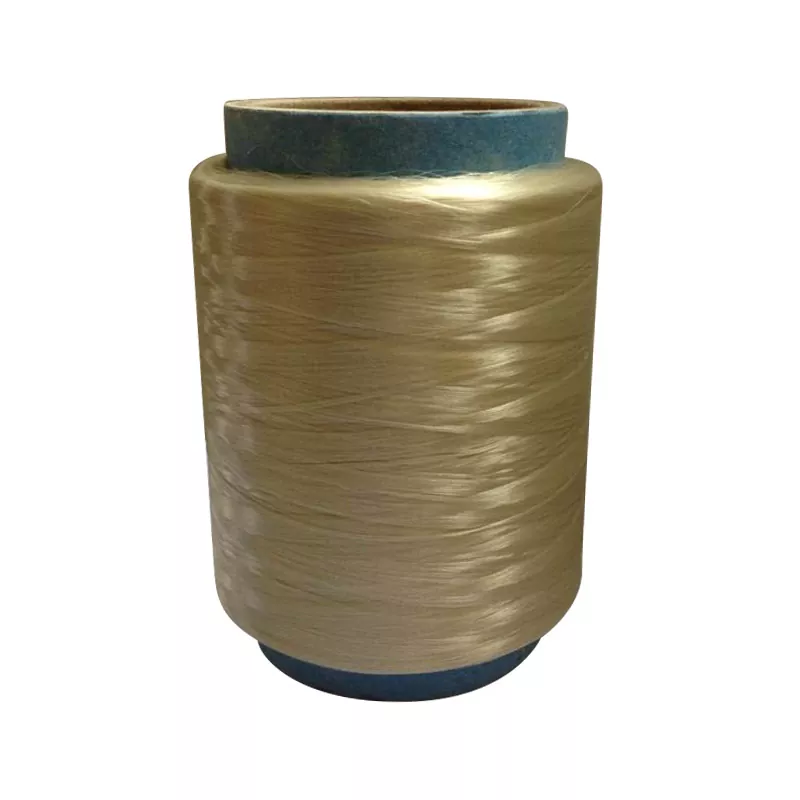
Tenacity Twisted PP Yarn is a high-strength synthetic yarn manufactured from polypropylene (PP) filaments and processed through a controlled twisting operation. It is designed for applications where tensile performance, structural stability, and dependable handling are important.
Unlike ordinary yarns intended mainly for decorative or lightweight textile purposes, high-tenacity twisted polypropylene yarn is developed to meet more demanding industrial requirements. Its combination of relatively low weight, useful mechanical strength, and resistance to moisture makes it a practical material for many textile manufacturers.
What Makes It Different from Ordinary PP Yarn?
The main difference lies in the combination of filament quality and twisting structure. High-tenacity filaments provide the fundamental strength, while twisting brings the filaments together into a more cohesive yarn structure.
This construction can help improve yarn handling, reduce filament separation, and provide more consistent performance during downstream processing. The actual result depends on filament characteristics, twist level, yarn construction, and manufacturing conditions.
How Is Tenacity Twisted PP Yarn Manufactured?
The manufacturing process generally involves several important stages:
- Polypropylene material preparation: Suitable PP raw material is selected according to the intended yarn properties.
- Filament spinning: Polypropylene is melted and extruded through spinnerets to form continuous filaments.
- Drawing and orientation: The filaments are stretched under controlled conditions to develop their required mechanical properties.
- Filament grouping: Individual filaments are assembled into the required yarn construction.
- Twisting: The yarn receives a specified number of turns per meter to create the desired structure.
- Winding and inspection: Finished yarn is wound onto suitable packages and checked for important quality characteristics.
Each stage contributes to the final product. Variations in raw material, drawing conditions, twisting tension, or winding quality may affect the yarn's performance during weaving, braiding, or sewing.
2. Why High-Tenacity Twisted PP Yarn Matters
Industrial textile manufacturers often face several challenges: yarn breakage, inconsistent finished-product strength, unstable machine operation, and unnecessary material waste. Selecting a suitable high-tenacity polypropylene yarn can help address these concerns.
2.1 Reliable Tensile Performance
Tensile strength is one of the most important indicators when selecting yarn for load-bearing or tension-related applications. A yarn with suitable tenacity can withstand the pulling forces experienced during production and product use.
For rope, webbing, and sling manufacturers, insufficient yarn strength may lead to premature product failure or inconsistent load performance. Buyers should therefore compare measured breaking force and tenacity rather than relying only on general product descriptions.
2.2 Lightweight Construction
Polypropylene has a relatively low density compared with many commonly used synthetic fibers. This makes PP yarn attractive for products where reducing overall weight is important.
For example, lightweight ropes, portable webbing, and textile accessories can benefit from a material that provides useful strength without adding unnecessary mass.
2.3 Low Moisture Absorption
Polypropylene absorbs very little moisture under normal conditions. This characteristic helps the yarn maintain relatively stable weight and handling properties in humid environments.
It is particularly useful for outdoor textile products, marine-related applications, and equipment that may be exposed to rain or splashing water. However, moisture resistance does not mean that every finished product is automatically suitable for continuous underwater or severe outdoor exposure.
2.4 Chemical Resistance
Polypropylene offers resistance to many acids and alkalis, which makes it useful in selected industrial environments. This property can be valuable for textile products used in chemical-related operations, filtration systems, and industrial handling.
Actual chemical compatibility depends on the concentration, temperature, exposure time, and specific chemical involved. Buyers should verify suitability for their working environment before selecting the material.
2.5 Flexible Processing Performance
Properly manufactured twisted yarn can provide a more stable structure for weaving, braiding, and other textile processes. Suitable twist specifications help maintain yarn integrity and can reduce handling problems caused by excessive filament separation.
3. Key Technical Specifications Buyers Should Understand
Technical specifications provide a more reliable basis for evaluating Tenacity Twisted PP Yarn than appearance alone. Understanding these parameters helps purchasing teams communicate accurately with suppliers and avoid ordering materials that do not match production requirements.
Typical Product Specifications
The following table presents the product specifications listed for Hongcheng Textile's Tenacity Twisted PP Yarn. These values provide a starting point for product selection and should be confirmed against the current quotation and technical data sheet.
| Specification | Product Details |
|---|---|
| Product Name | Tenacity Twisted PP Yarn |
| Material | 100% Polypropylene |
| Yarn Type | FDY |
| Denier Range | 200D–1800D |
| Filament Options | 33F / 66F / 72F / 90F / 144F |
| Tenacity | 3–5 G/D |
| Twist | 40–120 TPM |
| Air Intermingled Points | 18–25 pieces/meter |
| Origin | Fujian, China |
| Applications | Webbing, ropes, elastic ropes, shoelaces, slings, and related products |
3.1 Denier: Understanding Yarn Thickness
Denier measures the mass in grams of 9,000 meters of yarn. A higher denier generally indicates a heavier and thicker yarn, although the actual appearance and construction also depend on filament count and yarn structure.
- Lower denier: May be appropriate for lighter textile products and applications requiring finer yarn.
- Medium denier: Can serve general webbing, cord, and textile manufacturing requirements.
- Higher denier: May be selected for heavier ropes, industrial webbings, and applications requiring a more substantial yarn structure.
Choosing denier based only on thickness can be misleading. Manufacturers should also consider the required breaking force, fabric construction, machine compatibility, and finished-product dimensions.
3.2 Filament Count: 33F, 66F, 72F, 90F, and 144F
Filament count refers to the number of individual filaments making up a yarn bundle. Different filament counts can influence yarn texture, surface characteristics, flexibility, and processing behavior.
For example, manufacturers producing narrow woven products may have different requirements from those producing thicker ropes or industrial cords. The ideal filament configuration should be selected according to the intended construction and equipment.
3.3 Tenacity: Measuring Strength Efficiency
Tenacity describes breaking force relative to the linear density of a fiber or yarn. It is commonly expressed in grams per denier (G/D) for polypropylene yarn.
A higher tenacity value generally means that the yarn can withstand a greater pulling force relative to its weight. However, breaking elongation, knot performance, and finished-product design must also be considered when evaluating practical strength.
3.4 Twist: Understanding TPM
TPM means turns per meter. It describes how many twists are inserted into one meter of yarn.
Twist affects filament cohesion, yarn stability, flexibility, and handling. The correct twist level depends on the application. More twist does not automatically mean better performance because excessive twist may influence elongation, stiffness, and processing behavior.
4. How the Twisting Process Affects Yarn Performance
Twisting is a critical part of producing industrial polypropylene yarn. It changes how the individual filaments interact and influences the physical structure of the finished yarn.
4.1 Better Filament Cohesion
Twisting brings individual filaments together, helping them remain organized as a yarn bundle. This can reduce loose filament behavior and improve consistency during downstream manufacturing.
4.2 Improved Handling During Production
Stable yarn construction is important for high-speed textile machinery. When yarn structure and winding quality are consistent, manufacturers may experience smoother unwinding, more predictable tension, and fewer interruptions caused by yarn handling issues.
4.3 Choosing Between S Twist and Z Twist
Twist direction is another specification buyers should understand. S twist and Z twist describe the direction in which the filaments are twisted.
| Twist Type | Basic Description | Selection Consideration |
|---|---|---|
| S Twist | Twist direction follows the center stroke of the letter S. | Suitable when the downstream process or product construction requires S-direction twisting. |
| Z Twist | Twist direction follows the center stroke of the letter Z. | Suitable when the downstream process or product construction requires Z-direction twisting. |
Neither direction is universally better. The correct option depends on the design of the final product, the twisting or braiding process, and compatibility with other yarn components.
4.4 Why Twist Consistency Matters
Uneven twist can cause differences in yarn appearance, flexibility, and processing behavior. For manufacturers working with continuous production lines, consistent TPM across packages and batches is important for maintaining stable product quality.
5. Major Industrial Applications of Tenacity Twisted PP Yarn
Because of its strength-to-weight characteristics, moisture resistance, and adaptable yarn construction, Tenacity Twisted PP Yarn is used in various industrial and commercial textile products.
5.1 Webbing Manufacturing
Webbing is widely used in industrial straps, luggage accessories, equipment restraints, and textile fastening products.
For webbing manufacturers, yarn selection affects tensile performance, fabric appearance, weaving efficiency, and finished-product consistency. A suitable denier and twist combination can help manufacturers achieve the desired webbing structure.
5.2 Rope and Cord Production
Ropes and cords require yarn that can withstand repeated tension and mechanical handling. Twisted PP yarn is used as a raw material in various rope and cord constructions.
Its relatively low weight and low moisture absorption can be useful in marine-related and outdoor applications. For safety-critical ropes, the finished rope must undergo appropriate strength and performance testing. Yarn specifications alone cannot establish a rope's rated load capacity.
5.3 Elastic Rope Manufacturing
Elastic ropes and related products require a suitable combination of flexibility, strength, and construction stability. PP yarn may be incorporated into certain elastic rope structures alongside other materials, depending on the required stretch and recovery characteristics.
Manufacturers should assess how the selected yarn interacts with elastic cores and other components before finalizing material specifications.
5.4 Shoelace Production
Shoelaces need a balance of strength, flexibility, surface appearance, and abrasion performance. Twisted PP yarn can be used in shoelace manufacturing where its material properties and available colors meet the product design requirements.
Suitable yarn selection can help manufacturers maintain consistent braiding results and finished-lace appearance.
5.5 Lifting Sling and Industrial Strap Manufacturing
Industrial slings and lifting straps depend on carefully engineered textile structures. High-strength yarn is one of the important raw materials used in their production.
In these applications, buyers should pay particular attention to tensile properties, batch consistency, traceability, and the performance requirements of the completed lifting product. A yarn supplier's specifications should be evaluated alongside the finished-product testing requirements.
5.6 Other Technical Textile Applications
Depending on the yarn construction and customer specifications, twisted polypropylene yarn may also be considered for:
- Industrial textile accessories.
- Braided cords and narrow fabrics.
- General-purpose woven products.
- Specialized textile components.
- Selected netting and reinforcement applications.
6. How to Choose the Right Tenacity Twisted PP Yarn
Selecting a suitable yarn requires more than comparing prices or choosing the highest tenacity figure. Buyers should start with their finished-product requirements and work backward to determine the correct raw material specifications.
Step 1: Define the Final Product
Identify whether the yarn will be used for ropes, webbing, shoelaces, slings, or another application. Each product has different requirements for thickness, flexibility, strength, and surface characteristics.
Step 2: Confirm the Required Denier
Determine the yarn linear density needed for the target product. Consider the dimensions, weight, and construction of the finished textile, as well as the specifications of existing production equipment.
Step 3: Evaluate Tenacity and Elongation
Request actual technical data rather than relying on general descriptions such as high strength or industrial grade. Compare the breaking tenacity and elongation values with your product requirements.
Step 4: Select the Correct Twist Level
Discuss the appropriate TPM and twist direction with the supplier. The selection should reflect the yarn's intended processing method and finished-product construction.
Step 5: Check Filament Configuration
Confirm the filament count and yarn construction. These details can influence handling characteristics and the appearance of the final product.
Step 6: Request Samples for Production Trials
Sample testing is one of the most practical ways to evaluate whether a yarn is suitable for a specific production line.
Run the sample on your actual equipment whenever possible. Observe unwinding stability, yarn tension, breakage frequency, surface consistency, and finished-product performance.
Step 7: Confirm Packaging and Delivery Requirements
Discuss package weight, winding type, labeling, quantity, and shipping arrangements before placing a bulk order. Proper packaging helps protect the yarn during storage and transportation.
7. Common Purchasing Challenges and Practical Solutions
Even when a yarn appears suitable on paper, purchasing teams may encounter problems during production or after delivery. Identifying these issues early can help reduce unnecessary costs.
Challenge 1: Yarn Breakage During High-Speed Production
Possible causes: Inconsistent yarn strength, unsuitable tension settings, damaged packages, or an inappropriate yarn specification.
Recommended solution: Check the yarn's breaking properties, package condition, and production tension. Conduct a controlled machine trial before approving large-volume orders.
Challenge 2: Inconsistent Yarn Thickness
Possible causes: Variations in linear density, manufacturing conditions, or differences between production batches.
Recommended solution: Request linear density test results and confirm the supplier's inspection procedures. Establish acceptable tolerances before mass production.
Challenge 3: Twist Variation
Possible causes: Inconsistent twisting tension, machine settings, or process control.
Recommended solution: Specify the required TPM and twist direction clearly. Check multiple samples from different packages to evaluate consistency.
Challenge 4: Unsuitable Yarn for the Finished Product
Possible causes: Selecting yarn based only on price, denier, or advertised strength without considering the complete product construction.
Recommended solution: Share the intended application with the manufacturer and request technical recommendations. Verify suitability through sample production and testing.
Challenge 5: Outdoor Performance Concerns
Possible causes: Assuming that all polypropylene yarn automatically provides sufficient long-term UV resistance.
Recommended solution: If the finished product will be exposed to sunlight for extended periods, ask whether UV-stabilized material is available. Confirm the relevant testing conditions and expected service environment.
8. Quality Control and Testing Considerations
Reliable yarn quality depends on measurable specifications and consistent manufacturing control. For industrial buyers, quality evaluation should cover both individual yarn properties and production-batch consistency.
Important Quality Indicators
| Quality Indicator | What It Evaluates | Why It Matters |
|---|---|---|
| Linear Density | Yarn weight per unit length | Helps maintain consistent yarn thickness and finished-product construction. |
| Breaking Tenacity | Breaking force relative to linear density | Indicates strength efficiency. |
| Elongation at Break | Extension before yarn failure | Helps evaluate deformation characteristics. |
| Twist Level | Turns per meter | Influences yarn structure and processing behavior. |
| Appearance | Color, package condition, and visible defects | Supports consistent production and product presentation. |
| Package Quality | Winding uniformity and unwinding behavior | Helps reduce interruptions during manufacturing. |
Why Batch Consistency Is Important
A sample may perform well, but bulk production requires the same level of consistency across multiple packages and manufacturing batches.
Buyers should discuss inspection frequency, testing methods, acceptable tolerances, and documentation with their suppliers. For demanding applications, a written quality agreement can help clarify the acceptance criteria before shipment.
Test the Yarn in Real Production Conditions
Laboratory results provide valuable information, but they cannot fully replace actual production trials. Machine speed, yarn tension, environmental conditions, and product construction all influence processing performance.
A practical evaluation should combine technical testing with a trial run under representative operating conditions.
9. Why Work with a Professional PP Yarn Supplier?
For manufacturers purchasing polypropylene yarn in bulk, supplier selection is an important part of maintaining production stability. A dependable supplier should provide clear product specifications, consistent quality, responsive communication, and practical support throughout the purchasing process.
Technical Specification Matching
A professional manufacturer should be able to discuss the relationship between denier, filament count, tenacity, twist, and end-use requirements. This helps buyers avoid selecting materials that are technically available but unsuitable for their production process.
Consistent Manufacturing Standards
Stable manufacturing procedures and effective quality inspection help reduce variations between packages and batches. Buyers should ask about quality-control arrangements and request relevant technical documentation.
Flexible Product Requirements
Different customers may need different yarn configurations, colors, and packaging arrangements. A supplier that can clearly communicate available specifications makes it easier to develop suitable raw material solutions.
Communication and Order Support
Clear communication is essential when confirming technical details, samples, production schedules, and shipping arrangements. A responsive supplier can help resolve specification questions before they become production problems.
Quanzhou Hongcheng Textile Co., Ltd supplies Tenacity Twisted PP Yarn manufactured from 100% polypropylene. With product options covering 200D–1800D, multiple filament configurations, and twist specifications of 40–120 TPM, the company provides yarn solutions for manufacturers working with webbing, ropes, elastic ropes, shoelaces, and slings.
When evaluating a suitable yarn, buyers can communicate their target application and technical requirements to discuss the appropriate product configuration.
10. Frequently Asked Questions
Q1: What is Tenacity Twisted PP Yarn?
Tenacity Twisted PP Yarn is a high-strength polypropylene yarn made from continuous PP filaments that are twisted together. It is used in applications such as ropes, webbing, shoelaces, elastic cords, and industrial textile products.
Q2: What material is used to manufacture twisted PP yarn?
It is manufactured from polypropylene, a thermoplastic polymer known for its low density, low moisture absorption, and resistance to many common chemicals.
Q3: What denier range is available for Hongcheng Textile's Tenacity Twisted PP Yarn?
The listed product range is 200D–1800D. The appropriate denier depends on the finished product, required yarn thickness, and production equipment.
Q4: What does 3–5 G/D mean?
G/D means grams per denier. It is a unit of yarn tenacity that expresses breaking force relative to linear density. A higher value generally indicates greater strength relative to yarn weight.
Q5: What does TPM mean in twisted PP yarn?
TPM stands for turns per meter. It indicates how many twists are inserted into one meter of yarn. The required TPM depends on the intended application and processing conditions.
Q6: Is twisted PP yarn suitable for rope manufacturing?
Yes. Twisted polypropylene yarn is used as a raw material in various rope and cord constructions. The final rope's load-bearing capacity must be established through appropriate finished-product design and testing.
Q7: Can twisted PP yarn be used for outdoor applications?
It can be used in selected outdoor applications because polypropylene absorbs little moisture. For prolonged sunlight exposure, buyers should confirm whether UV-stabilized yarn is available and suitable for the expected service conditions.
Q8: What is the difference between S twist and Z twist?
S twist and Z twist describe two different twisting directions. The appropriate direction depends on the requirements of the final textile construction and the downstream manufacturing process.
Q9: How can buyers select the correct twisted PP yarn?
Buyers should consider denier, filament count, tenacity, elongation, twist level, twist direction, color, and intended application. Testing samples on actual production equipment is recommended before bulk purchasing.
Q10: What information should be provided when requesting a quotation?
Provide the required denier, filament count, tenacity, TPM, twist direction, color, application, packaging preferences, and estimated order quantity. If available, include a reference sample or technical specification sheet.
Final Thoughts: Selecting Yarn That Supports Better Production
Choosing the right Tenacity Twisted PP Yarn is an important decision for manufacturers seeking stable processing, dependable tensile performance, and consistent finished-product quality.
By understanding denier, filament count, tenacity, twist level, and application requirements, buyers can make more informed purchasing decisions and reduce the risk of material mismatches. Sample testing, technical communication, and batch-quality evaluation are equally important when selecting a long-term yarn supplier.
Whether your production focuses on industrial webbing, ropes, elastic cords, shoelaces, or lifting slings, the right polypropylene yarn specification can help create a more reliable manufacturing process.
Looking for a Reliable Tenacity Twisted PP Yarn Supplier?
Choosing the right yarn starts with understanding your production requirements. Quanzhou Hongcheng Textile Co., Ltd is ready to discuss your specifications and help you identify a suitable polypropylene yarn solution.
Contact our team today to discuss denier, filament count, tenacity, twist requirements, and bulk purchasing needs.
Contact Us