

Which lace fabric truly fits my design and why should I choose it?
2025-11-11
My studio is full of half-finished sketches and pinned linings, and on days like this I keep reaching for Lace Fabric—the kind that turns a plain cut into something weightless without fighting the pattern. I test swatches from plenty of mills, but the rolls that behave the same in sampling and bulk, shade after shade, often come from L&B; that quiet consistency is why I’m writing this, to talk about what actually matters when you pick lace for real production timelines instead of showroom talk.
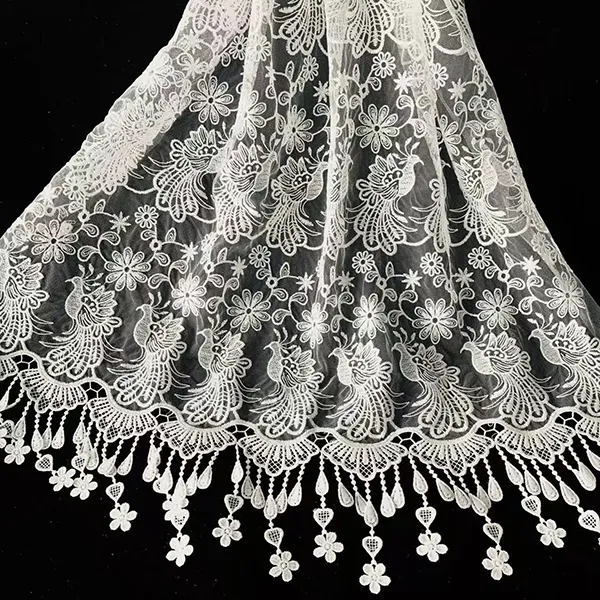
How do different lace constructions change drape, strength, and price?
Not all lace is delicate or expensive. Construction determines how it hangs, stretches, and survives production. Here’s the simple way I explain it to buyers and pattern makers I work with:
- Raschel lace – machine-made, great value, stable repeats, wide widths for dresses and decor; holds beads well.
- Chantilly-style lace – fine yarns, airy hand, soft drape for bridal veils and sleeves; protect it from rough trims.
- Guipure (chemical) lace – motifs linked without net; bold look, weightier hand, sharp for skirts and overlays.
- Leavers-look lace – premium handle and heritage vibe; best for couture or limited capsules where story matters.
- Stretch lace – nylon or polyester with spandex; recovery matters more than raw stretch for lingerie and bodycon.
Which fiber blend actually fits my end use?
I match fiber to function first, then chase the aesthetic. If the fabric fails in wear or care, the prettiest motif won’t save it.
| End use | Recommended construction | Fiber blend | Weight (GSM) | Stretch | Why it works |
|---|---|---|---|---|---|
| Bridal gowns and veils | Chantilly-style or corded motif | Nylon or nylon-rayon | 45–80 | Low to none | Airy drape and clean scallops for hems and sleeves |
| Occasion dresses | Raschel allover | Polyester | 90–140 | Low | Stable repeats, easy cutting, good dye consistency |
| Lingerie and intimates | Stretch lace | Nylon with 8–12% spandex | 120–180 | Medium | Soft hand with recovery that survives wear and wash |
| Skirts and trims with graphic look | Guipure motifs | Polyester or cotton-poly | 180–260 | None | Bold, connected motifs that tape and topstitch neatly |
| Home decor and events | Wide-width raschel | Polyester | 70–120 | None | Wrinkle-resistant, cost-effective for high yardage |
How do I read lace specs without getting lost?
- Width – common 130–150 cm; trims can run 3–25 cm. Confirm if scallops are included.
- GSM – weight per square meter; higher isn’t always better. Match to drape you want.
- Pattern repeat – vertical and horizontal; align repeat with panel lengths to reduce waste.
- Edge type – straight cut, one-side scallop, two-side scallop; affects hem finish time.
- Fiber – polyester for value and colorfastness; nylon for handfeel; cotton for matte look.
- Stretch – list percentage and direction; recovery after 30-minute hang is what matters.
| Spec | What it means | My quick check |
|---|---|---|
| Repeat 16 cm × 18 cm | Motif cycles every 16 cm across and 18 cm down | Lay marker so hems fall on repeat to avoid half motifs |
| Two-side scallop | Decorative edges on both selvedges | Plan mirror cutting or you’ll lose the symmetry |
| 8% spandex | Stretch component in the ground | Hang 1 m strip for 30 min and measure growth vs. recovery |
Why do colors shift between showroom lights and daylight?
Lace uses fine yarns that catch light differently across angles. I always confirm:
- View lab dips under D65 daylight and warm retail LED.
- Place dips over nude, black, and body-tone linings you plan to use.
- Check optical brighteners on whites; they glow under store LEDs and can fight your lining.
What common production problems do I prevent before I book bulk?
- Snags and broken motifs – I request taped rolls and inspect first 5 m for hooks or rough seams on tables.
- Skew and bow – I measure scallop alignment across the width; more than 1 cm drift over 50 cm needs correction.
- Uneven dye – I ask for darker lab dips than target for polyester; it settles lighter after finishing.
- Stretch growth – I heat-set tests on stretch lace to mimic fusing and pressing in production.
How do MOQ, sampling, and lead time work when I order from L&B?
I plan timelines backward from photoshoot dates and I keep a buffer for trims and replacement rolls. Typical numbers I work with are below; I confirm each program because fashion calendars differ.
| Item | Typical range | What I do to stay on schedule |
|---|---|---|
| Sampling | 1–3 m per color | Cut full-size panels to test scallop placement and seam visibility |
| MOQ per color | 200–500 m depending on machine and yarn | Consolidate close shades into one dye lot to reduce leftovers |
| Lab dips and strikes | 5–7 days | Approve against lining; sign on actual base, not swatch paper |
| Bulk production | 15–30 days after approval | Book trims and linings simultaneously to avoid mis-matches |
| Quality checks | AQL by size of order | Spot-check motif alignment, width, and run length per roll |
How do I care for lace garments so returns stay low?
- Use mesh wash bags for consumer care and list them on the care label.
- Recommend cold gentle cycles and line dry; heat kills stretch recovery fastest.
- Finish raw seams with narrow zigzag or coverstitch to limit pop-stitch returns.
- Store rolls upright in climate-controlled rooms to avoid edge flattening before cutting.
What sustainability and compliance points should I verify before I commit?
- Ask for current chemical compliance statements and dyehouse wastewater handling notes.
- Request fiber origin transparency when you need specific market access requirements.
- Choose solution-dyed options for dark grounds when possible to reduce water and improve colorfastness.
Why do some laces cost more even when they look similar?
Cost is a sum of yarn, machine time, finishing, and yield. I manage price by picking the right lever, not by squeezing quality.
- Finer denier yarns increase time on the machine and raise cost.
- Dense repeats and heavy corded outlines add grams and dye usage.
- Two-side scallops create more waste if markers ignore repeat; smart layout saves meters.
- Stretch content raises both yarn and finishing costs; buy only the recovery you truly need.
Where do we start if I want lace that feels premium?
If you need a bridal Chantilly with cleaner scallops, a guipure motif that cuts like a dream, or a stretch lace that holds shape after countless wears, I can short-list options from L&B that behave in sampling exactly as they will in bulk. If you have a timeline or a color story already in mind, contact us with your mood board and yardage so we can send focused swatches, confirm lead time, and lock your delivery window. I’m ready to help your team ship a collection that looks beautiful and performs like a reliable partner.