

What's the Difference Between 4 Way Stretch Fabric and Spandex Blends
2026-10-21
Choosing the right stretch material can make or break a product's fit, comfort, and durability. Many buyers assume that any fabric with stretch is the same, yet 4 Way Stretch Fabric and spandex blends behave very differently in production and performance. At Derusen, we supply both categories to apparel brands, and we regularly help clients match the right material to the right end use. Understanding the structural and functional gap between these two fabric types is essential before you specify anything for activewear, swimwear, or everyday garments.
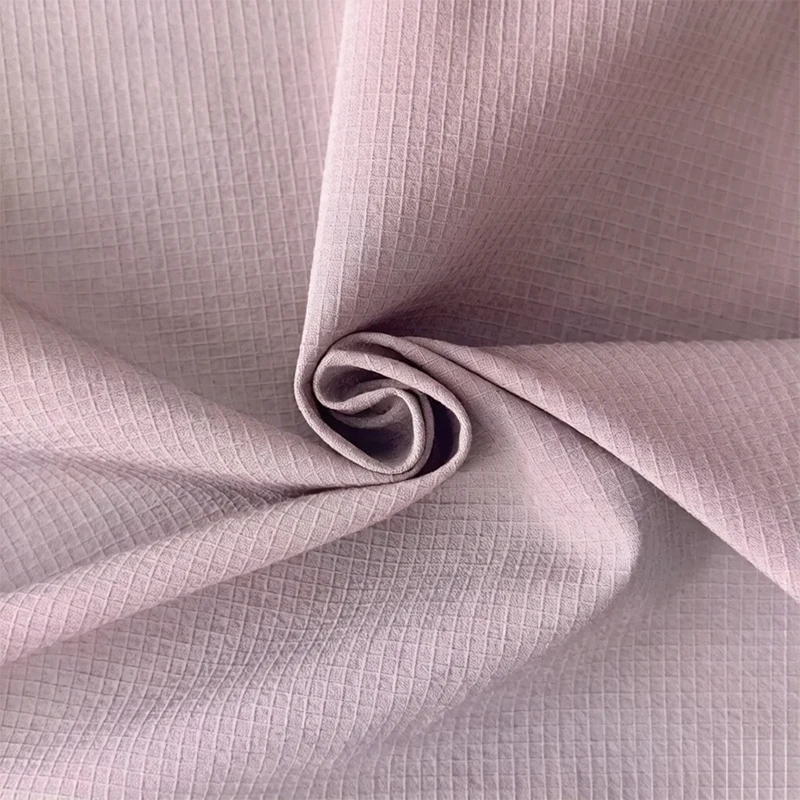
The Core Difference: Structure vs. Composition
The confusion usually comes from mixing two different concepts. 4 Way Stretch Fabric describes a fabric's stretch behavior — it stretches in both the horizontal (weft) and vertical (warp) directions. Spandex blends describe a fabric's fiber composition — a base material combined with elastane (spandex) to create elasticity. A fabric can be a spandex blend and still only stretch two ways; likewise, a 4 Way Stretch Fabric may contain spandex, but its defining feature is the four-way mechanical structure.
Key Comparison at a Glance
| Feature | 4 Way Stretch Fabric | Spandex Blends |
|---|---|---|
| Defining property | Stretch direction (warp + weft) | Fiber content (elastane percentage) |
| Elasticity source | Knit structure and fiber blend | Spandex/elastane content |
| Recovery | Excellent multidirectional recovery | Good, depends on spandex ratio |
| Typical spandex content | 5%–20% (varies) | 2%–30% (varies) |
| Best for | Performance apparel, swimwear, leggings | T-shirts, denim, casual wear |
| Drape and hand feel | Snug, supportive, body-hugging | Softer, more relaxed |
| Cost profile | Higher due to engineering | Lower to moderate |
Performance Differences That Matter in Production
-
Freedom of movement: 4 Way Stretch Fabric follows the body in every direction, which reduces restriction during dynamic motion.
-
Shape retention: Four-way structures generally recover better after repeated stretching, minimizing bagging at knees and elbows.
-
Consistency: Spandex blends can vary widely in stretch percentage, so lot-to-lot consistency requires tighter specification.
-
Processing: 4 Way Stretch Fabric demands careful cutting and sewing to avoid over-stretching seams; spandex blends are more forgiving on standard equipment.
-
End-use fit: For compression and swimwear, four-way stretch is usually the stronger choice; for casual tops, a spandex blend often delivers sufficient comfort at a lower cost.
How to Choose the Right Option
-
Define the garment's motion demands first.
-
Specify stretch percentage and recovery targets, not just fiber content.
-
Request test data for elongation and growth.
-
Confirm care and durability expectations with your supplier.
-
Match the material to the price point your market supports.
Frequently Asked Questions
Is 4 Way Stretch Fabric always made with spandex? No — four-way stretch can come from knit structure and other elastic fibers, though spandex is common in performance versions.
Can spandex blends be four-way stretch? Yes, a spandex blend can be engineered as 4 Way Stretch Fabric, but the spandex content alone does not guarantee four-way behavior.
Which is better for leggings and swimwear? 4 Way Stretch Fabric is generally preferred because multidirectional stretch and recovery support movement and shape retention.
Does higher spandex content always mean better quality? Not necessarily — balance, recovery, and construction matter more than a single percentage figure.
Ready to specify the right stretch material for your next collection? Derusen provides technical guidance, sample support, and consistent bulk supply of 4 Way Stretch Fabric and spandex blends. Contact our team today to discuss your requirements and request a quote.