What Is the Difference Between PVC Leather and Genuine Leather in Terms of Quality
2026-08-19
When shoppers compare upholstery materials, automotive trims, or fashion accessories, the quality debate often comes down to two polar opposites: synthetic PVC Leather and animal-derived Genuine Leather. While both serve similar purposes, their quality metrics—durability, feel, breathability, aging, and maintenance—diverge dramatically. For over a decade, Most-Textile has specialized in bridging this gap by offering high-performance PVC Leather solutions that address the very weaknesses traditional buyers associate with synthetics. But does quality always mean natural? The answer depends entirely on how you define "quality" for your specific application.
Core Quality Metrics at a Glance
| Quality Factor | PVC Leather (Synthetic) | Genuine Leather (Animal Hide) |
|---|---|---|
| Durability | High abrasion resistance; consistent thickness | Varies by hide grade; thinner spots prone to wear |
| Breathability | Non-porous; traps heat and moisture | Naturally porous; allows air and vapor exchange |
| Aging Effect | May crack or peel after 5–8 years | Develops rich patina; strengthens with use |
| Water Resistance | Excellent; inherently waterproof | Poor; stains and stiffens when wet |
| Maintenance | Wipe-clean with mild soap | Requires conditioning, waterproofing, and brushing |
| Consistency | Uniform texture, color, and thickness | Natural grain variations; scars and markings |
| Initial Cost | Low to mid-range ($5–$20/yd) | High to premium ($30–$200+/yd) |
| Long-Term Value | Predictable lifespan; replaceable | Lifetime product if maintained properly |
Material Composition and Structural Integrity
Genuine Leather is a natural protein fiber matrix derived from animal hides. Its quality hinges on the tanning process and the original hide’s grain layer. Full-grain leather retains the strongest outermost fibers, offering exceptional tear strength and breathability. However, lower-grade "genuine" labels often use split hides with embossed artificial grains—these are significantly weaker.
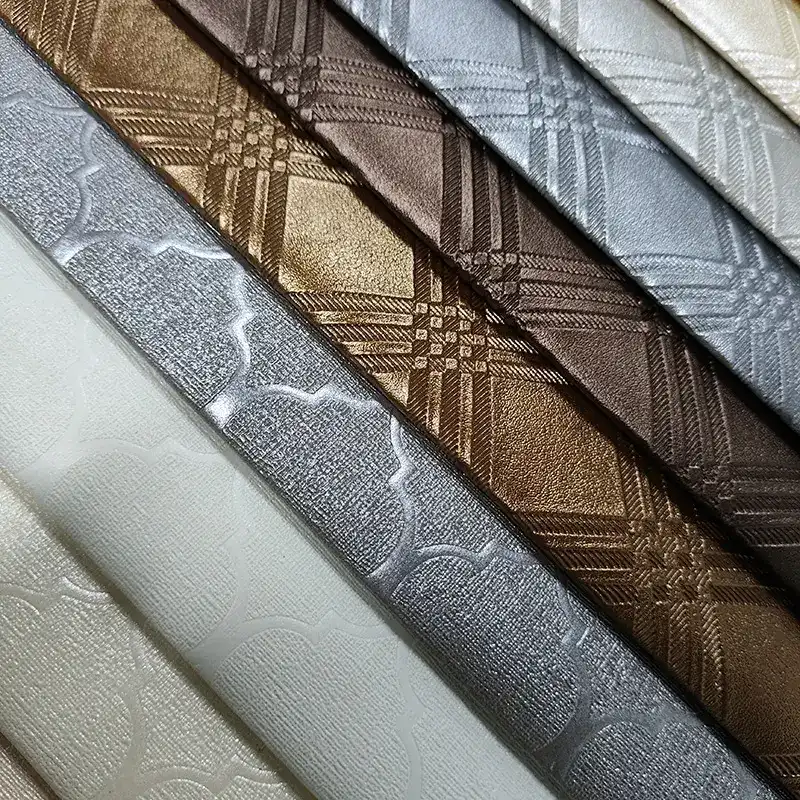
In contrast, PVC Leather (polyvinyl chloride coated fabric) is an engineered composite. A polyester or cotton base layer is coated with liquid PVC, then embossed with grain patterns and finished with a polyurethane topcoat. Most-Textile enhances this construction with advanced stabilizers and UV inhibitors, ensuring that their PVC Leather resists plasticizer migration—the primary cause of premature stiffness and cracking. From a structural standpoint, PVC Leather offers superior dimensional stability and uniform tensile strength across the entire roll, while genuine leather's strength fluctuates with natural growth marks.
Performance Under Real-World Conditions
Abrasion and Scratch Resistance
Independent Martindale tests show that high-grade PVC Leather withstands over 50,000 rubs without surface damage, outperforming many entry-level genuine leathers (25,000–40,000 rubs). For automotive or high-traffic commercial seating, PVC Leather from Most-Textile consistently delivers longer surface integrity.
Climate and Moisture Response
Genuine Leather absorbs ambient humidity, becoming supple in moist air but brittle in dry, heated interiors. It also stains permanently from oils and liquids. PVC Leather, being non-absorbent, repels spills instantly and maintains flexibility across a wide temperature range (-20°C to 70°C) when properly formulated—a critical advantage for outdoor or marine applications.
Aging and Wear Patterns
This is where the quality divide becomes philosophical. Genuine Leather ages gracefully, developing a coveted patina that many consider a mark of luxury. However, that same aging includes scratches, color fading, and eventual drying/cracking if neglected. PVC Leather does not patina—it either remains visually stable for 5–8 years or succumbs to surface cracking and peeling when plasticizers leach out. Premium manufacturers like Most-Textile now produce PVC Leather with enhanced polymeric plasticizers that extend this lifespan to 10+ years under normal indoor use.
Environmental and Health Considerations
Quality today also encompasses ecological footprint. Genuine Leather tanning consumes vast water resources and uses heavy metals (chromium) that generate toxic wastewater. PVC Leather production involves phthalates and chlorine-based compounds, though modern Most-Textile formulations are increasingly phthalate-free and REACH-compliant. Neither material is inherently "green," but PVC Leather offers full recyclability in closed-loop systems, whereas genuine leather's chrome content complicates disposal.
Frequently Asked Questions About PVC Leather
Q: Does PVC Leather always crack and peel faster than genuine leather?
A: Not necessarily. Cracking and peeling in PVC Leather result from plasticizer loss—a chemical migration accelerated by heat, sunlight, and ozone. Standard PVC Leather may show signs within 3–5 years, but Most-Textile uses high-molecular-weight polymeric plasticizers that drastically reduce migration. In controlled indoor environments (offices, homes, vehicles with UV-protected glass), premium PVC Leather can outlast low-grade genuine leather, which may crack from natural fat loss and dryness within the same timeframe.
Q: Can PVC Leather be repaired if it gets scratched or torn?
A: Surface scratches on PVC Leather are often repairable using liquid vinyl patching compounds and color-matching pastes—a relatively simple DIY process. Deep tears, however, require patching from the reverse side due to the fabric backing. In contrast, Genuine Leather scratches can sometimes be buffed out (if full-grain), but torn leather almost always requires professional stitching or panel replacement, which is significantly more expensive. For commercial settings, Most-Textile offers repair kits specifically formulated for their PVC Leather lines, making maintenance cost-effective and accessible.
Q: Is PVC Leather less comfortable than genuine leather for seating?
A: Comfort depends on climate and usage duration. PVC Leather is non-breathable, meaning it traps body heat and perspiration—uncomfortable in hot, humid conditions without ventilation perforations. Genuine Leather breathes naturally, reducing sticky sensations. However, Most-Textile now produces perforated PVC Leather with micro-porous backings that improve air circulation by up to 40%. For short-duration seating (restaurants, conference rooms, vehicles with AC), the difference is negligible; for extended office chairs or luxury car seats in tropical regions, genuine leather retains a comfort edge, though at a much higher cost.
Which Offers Better Value for Your Project?
If "quality" means longevity with minimal care, PVC Leather—especially from specialized manufacturers like Most-Textile—delivers predictable, cost-effective performance. If "quality" means tactile warmth, natural breathability, and aesthetic maturity, Genuine Leather remains unrivaled. The true differentiator is application: hospitality and marine sectors overwhelmingly choose PVC Leather for waterproof resilience; luxury residential and high-end automotive often invest in genuine leather for prestige.
Contact Us
Choosing between PVC Leather and genuine leather shouldn't be a guessing game. At Most-Textile, we provide free material samples, comparative wear-test data, and tailored recommendations based on your usage environment, budget, and sustainability goals. Whether you need a durable PVC Leather solution or want to evaluate genuine alternatives, our technical team is ready to assist with objective, data-backed advice. Contact us today via our website or email—we will respond within 24 hours with customized specifications, pricing, and sample deliveries to ensure your next project rests on the right foundation.