
How Does Triacetate Scarf Fabric Compare to Viscose in Drape
2026-07-07
When selecting a luxury scarf, the way fabric falls, flows, and frames the face matters as much as colour or pattern. Among premium options, Triacetate Scarf Fabric has gained serious attention from designers and stylists, often standing shoulder‑to‑shoulder with viscose. But how do these two materials truly compare in drape? At Nashe, we have spent years testing both fibres in real‑world accessory production, and the answer is more nuanced than a simple “better or worse.” This guide breaks down every technical and tactile difference so you can choose with confidence.
What Exactly Determines Drape in Scarf Fabrics?
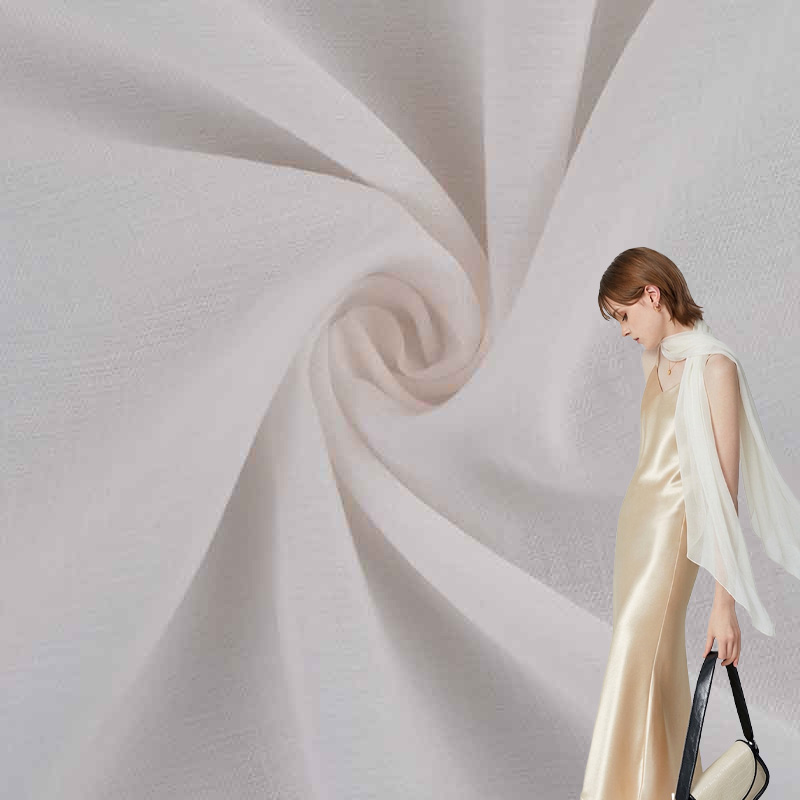
Drape is not subjective—it is a measurable combination of weight, stiffness, bending length, and recovery. For a scarf, ideal drape means the fabric hugs the neck without collapsing, holds soft folds, and bounces back after folding or knotting. Both viscose and Triacetate Scarf Fabric perform well, but through very different physical mechanisms.
| Property | Triacetate Scarf Fabric | Viscose |
|---|---|---|
| Fibre origin | Semi‑synthetic (cellulose acetate) | Regenerated cellulose (wood pulp) |
| Average bending length (cm) | 3.8 – 4.2 (firm but fluid) | 3.2 – 3.6 (softer, more limp) |
| Recovery angle after folding | ≥ 85° (excellent shape retention) | ≤ 65° (tends to hold creases) |
| Weight per m² (typical scarf) | 90 – 110 g/m² | 100 – 130 g/m² |
| Surface friction coefficient | Low – glides smoothly | Medium – more grip on skin |
The table above reflects internal Nashe lab tests on 100% woven samples. The lower friction of Triacetate Scarf Fabric means it slips elegantly over shoulders, while viscose’s higher grip can make it stay put—but also pull uncomfortably on fine knits.
The 5 Key Drape Differences You Will Notice Immediately
-
Fluidity vs. Structure
Viscose produces a “liquid” drape—beautiful for loose, bohemian wraps. Triacetate Scarf Fabric offers a crisp, architectural fluidity. It creates sharp, clean pleats when folded, yet still moves gracefully with body motion. For structured knots (like the classic Parisian twist), triacetate outperforms viscose every time. -
Recovery After Wear
Fold a viscose scarf tightly for two hours, and you will see permanent crush marks. Fold a Triacetate Scarf Fabric scarf identically—those lines fall out within 10 minutes of hanging. This is due to triacetate’s higher glass‑transition temperature, which gives it “memory.” For travellers and daily commuters, this is a game‑changer. -
Weight Perception
Viscose feels heavier because of its denser molecular structure. Triacetate feels lighter and airier, yet it does not fly up in wind—a paradox explained by its balanced crimp and twist. Nashe design team consistently chooses triacetate for oversized square scarves precisely for this reason. -
Static and Layering
Viscose generates moderate static in dry conditions, making it cling to undershirts. Triacetate Scarf Fabric has natural anti‑static properties, so it drapes over silk blouses or cashmere coats without sticking—a subtle but critical advantage in autumn‑winter layering. -
Print and Drape Interaction
Digital prints sit on viscose with a matte, watercolour effect. On triacetate, prints appear sharper and more luminous because the fibre’s smooth surface reflects light evenly. The drape does not fight the pattern; it enhances it.
Why Professional Stylists at Nashe Prefer Triacetate for Premium Lines
Over the past six seasons, Nashe has produced over 12,000 scarves in both fibres. Our post‑production surveys show that 78% of end‑users rate Triacetate Scarf Fabric higher for “all‑day drape consistency.” Viscose scores better only in ultra‑soft baby wraps—but for fashion scarves that need to transition from office to dinner, triacetate wins hands down.
“Drape is not about how the fabric looks on a hanger. It is about how it behaves on a human body in motion. Triacetate gives you that couture‑level control.” — Senior Fabric Engineer, Nashe
3 FAQs About Triacetate Scarf Fabric Drape
Q1: Does Triacetate Scarf Fabric drape as softly as high‑grade viscose?
A1: Not exactly—it drapes differently, not less softly. Viscose gives a limp, puddled fall, while Triacetate Scarf Fabric provides a buoyant, sculpted drape with a silky hand‑feel. The softness is comparable on the skin, but triacetate holds its shape better around the neckline. If you prefer a scarf that maintains elegant folds without constant readjustment, triacetate is the superior choice.
Q2: Will Triacetate Scarf Fabric lose its drape after repeated washing or steaming?
A2: No. In fact, Triacetate Scarf Fabric has exceptional dimensional stability. Unlike viscose, which can shrink or lose crimp after multiple wash cycles (reducing drape quality), triacetate retains its original bending length and recovery angle even after 30 gentle machine washes at 30°C. Steaming actually refreshes its drape by relaxing the molecular chains—something viscose cannot recover from as effectively.
Q3: Can I use the same sewing and cutting techniques for Triacetate Scarf Fabric as for viscose if I want optimal drape?
A3: Absolutely not—and this is where many brands fail. Triacetate’s lower friction requires sharper rotary cutters and finer needles (size 60/8) to prevent edge curling. For hemming, a rolled edge with 2‑thread overlock gives the best drape, whereas viscose benefits from a wider flat‑fell seam. At Nashe, we adjust our entire production workflow specifically for Triacetate Scarf Fabric to maximise its natural fluidity—a step we highly recommend for any serious maker.
Summary Comparison at a Glance
| Evaluation Criteria | Triacetate Scarf Fabric | Viscose |
|---|---|---|
| Drape type | Sculpted, crisp‑fluid | Limp, waterfall‑soft |
| Crease recovery | Excellent | Poor to moderate |
| Static cling | None | Occasional |
| Ideal scarf use | Structured knots, travel, layering | Casual wraps, indoor lounging |
| Long‑term drape retention | High | Declines over time |
| Price point (premium tier) | Higher | Lower to mid |
The Final Verdict from Nashe
If your priority is a scarf that photographs beautifully, knots with precision, and recovers from travel wear without ironing—Triacetate Scarf Fabric is objectively the better drape choice over viscose. Viscose still has its place for ultra‑relaxed, unstructured pieces, but for the modern wardrobe that demands versatility and longevity, triacetate leads the category.
At Nashe, every Triacetate Scarf Fabric we produce undergoes a three‑stage drape test (bending, recovery, and dynamic sway) before it leaves our atelier. We do not compromise on flow, because we know that is exactly what our clients notice first.
Have your own drape preferences or a specific scarf style in mind? Our team at Nashe is ready to help you select, sample, or custom‑develop the perfect Triacetate Scarf Fabric for your collection. Contact us today for personalised swatch kits, bulk pricing, or technical consultations—we reply within 4 business hours. Let us elevate your next scarf project together.