
How Does an Aspirator Suction Gun Improve Fibrillated Fiber Handling?
2025-12-25
Article Summary: This comprehensive guide provides an in-depth exploration of the Aspirator Suction Gun for Fibrillated Fiber. It covers product specifications, applications, common questions, and usage best practices. By examining the technical aspects and operational insights, this article aims to assist industrial users in optimizing fiber handling efficiency.
Node 1: Introduction and Product Overview
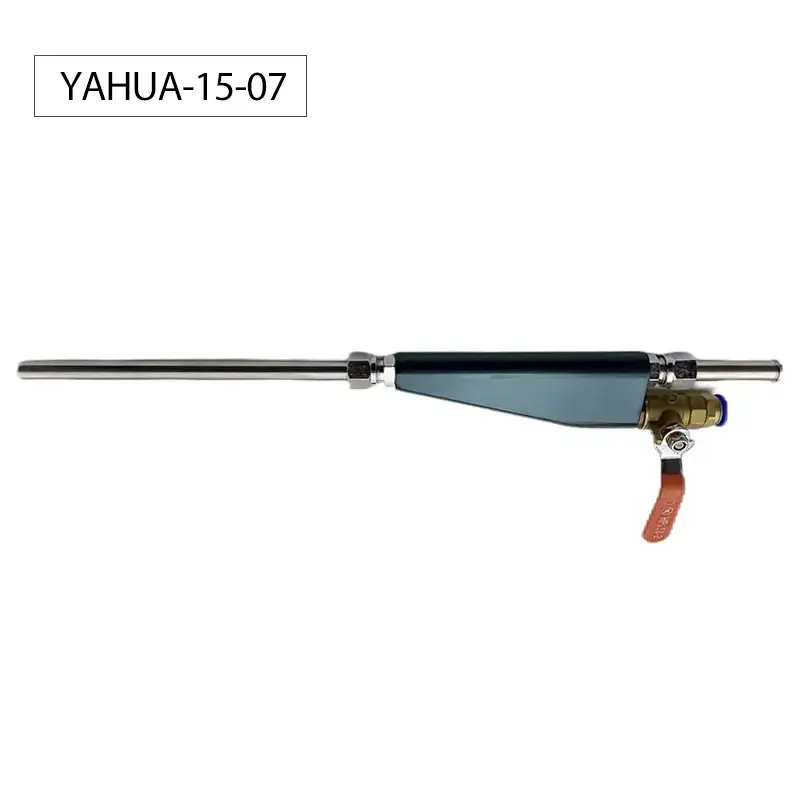
The Aspirator Suction Gun for Fibrillated Fiber is a precision-engineered industrial device designed to efficiently handle fibrillated fibers in manufacturing, chemical, and composite material processes. Its design ensures rapid fiber suction, minimal wastage, and consistent operational reliability. This article focuses on understanding the core functionalities, operational efficiency, and practical applications of the aspirator suction gun while addressing common concerns and usage questions.
The primary purpose of this device is to improve fiber collection and management by providing controlled suction, reducing contamination, and optimizing fiber dispersion. Industries relying on fibrillated fiber processing, such as composites manufacturing and filtration media production, often require such specialized equipment to maintain high-quality output and operational safety.
Node 2: Technical Parameters and Operational Insights
Understanding the technical specifications is crucial for selecting the appropriate aspirator suction gun for specific fiber handling needs. Below is a detailed overview of typical product parameters:
| Parameter | Specification |
|---|---|
| Model | YH-FSG-200 |
| Suction Capacity | Up to 1200 L/min |
| Operating Pressure | 0.6 – 0.8 MPa |
| Material Compatibility | Fibrillated fibers, fine powders, composite filaments |
| Dimensions | Length: 450 mm, Diameter: 80 mm |
| Weight | 2.8 kg |
| Nozzle Diameter | 15–25 mm adjustable |
| Construction Material | Stainless steel 304 with reinforced polymer components |
| Temperature Resistance | Up to 150°C |
| Noise Level | ≤75 dB |
Operational insights include optimal positioning for fiber collection, maintenance scheduling to prevent clogging, and adjustment techniques to control suction intensity. Proper alignment with fiber feed systems ensures consistent performance.
Node 3: Common Questions and Expert Answers
1. How to maximize the suction efficiency of the Aspirator Suction Gun for Fibrillated Fiber?
To maximize suction efficiency, ensure the nozzle size matches the fiber type and feed rate. Regularly clean the internal filter, maintain operating pressure between 0.6 and 0.8 MPa, and avoid excessive bending of the suction hose, which may reduce airflow.
2. How to prevent clogging when handling high-density fibrillated fibers?
Clogging can be minimized by periodically shaking or tapping the collection chamber, using a pre-separator to reduce fiber load, and selecting appropriate nozzle diameter settings based on fiber thickness. Additionally, maintaining ambient humidity below 60% helps prevent fiber adhesion inside the device.
3. How to perform routine maintenance for optimal longevity?
Routine maintenance includes disassembling the suction gun every 200 hours of operation, cleaning all internal channels and filters, inspecting the polymer components for wear, and lubricating moving parts. This ensures stable performance and prevents long-term damage.
4. How to choose the correct model for different industrial applications?
Select the aspirator model based on fiber type, operational volume, and required suction pressure. Light fibrillated fibers require a lower-capacity model, while denser fibers demand higher suction capacity and reinforced construction to withstand wear.
Node 4: Applications, Advantages, and Brand Information
The Aspirator Suction Gun for Fibrillated Fiber finds application in several industrial sectors. Common use cases include:
- Composite materials production for automotive and aerospace industries.
- Filtration media manufacturing where fiber dispersion consistency is critical.
- Laboratory and pilot-scale fiber testing and sample collection.
- Chemical processing facilities requiring precise fiber handling.
Key operational benefits include reduced fiber wastage, faster collection cycles, and improved safety in industrial environments. Its adjustable nozzle and ergonomic design contribute to ease of use and lower operator fatigue.
Yahua, a recognized industry brand, has integrated high-quality engineering and extensive field testing into this aspirator suction gun line. Their focus on durability, performance, and user-friendly operation ensures that industrial clients can rely on consistent fiber handling without disruption.
For more information on product specifications, application guidance, or purchasing inquiries, contact us directly. The Yahua team provides technical support and consultation to optimize operational efficiency and safety standards in fiber handling processes.