ODM Tennis Socks: Key Factors for Custom Sock Production
2026-10-15
Every serious tennis player knows that the right socks can make or break a match. Yet when it comes to ODM tennis socks, the gap between a decent product and a standout one often comes down to details most brands overlook. From moisture-wicking yarn blends to reinforced heel and toe zones, each factor shapes comfort, durability, and ultimately your brand’s reputation. At Mingjun, we’ve spent years refining these production variables—so you can focus on growing your line without second-guessing quality. Here’s what actually matters when you’re developing custom tennis socks.
Yarn Blends That Handle Sweat, Friction, and Repeated Washes
A good performance yarn isn't just about softness on the shelf—it has to survive what happens after the first wear. Blends built for sweat, friction, and repeat wash cycles usually pair a tough synthetic core with a softer outer layer, so the yarn keeps its shape while still feeling decent against skin. The goal is simple: no pilling after a rough day, no sagging after a spin cycle, and no weird odor buildup halfway through a workout.
Friction is where most blends fall apart. Under the arms, along backpack straps, or where thighs rub together, fibers get pulled loose, twisted, and eventually break. The better yarns use longer staple lengths and a tighter twist, which reduces the number of loose ends that can catch on each other. Some also wrap a fine filament around a spun core, letting the surface take the abuse while the interior holds the tensile strength.
Sweat and washing add a different kind of stress. Natural fibers like merino can absorb a lot of moisture without feeling damp, but they're often blended with polyester or nylon to speed up drying and hold their shape through dozens of wash cycles. The trick is keeping the blend ratios balanced—too much synthetic and the fabric starts to smell and feel plastic; too much natural and it shrinks or stretches. A well-built blend handles both ends and still looks good after a year of hard use.
Design Inputs Beyond Logos: Arch Support and Toe Seams
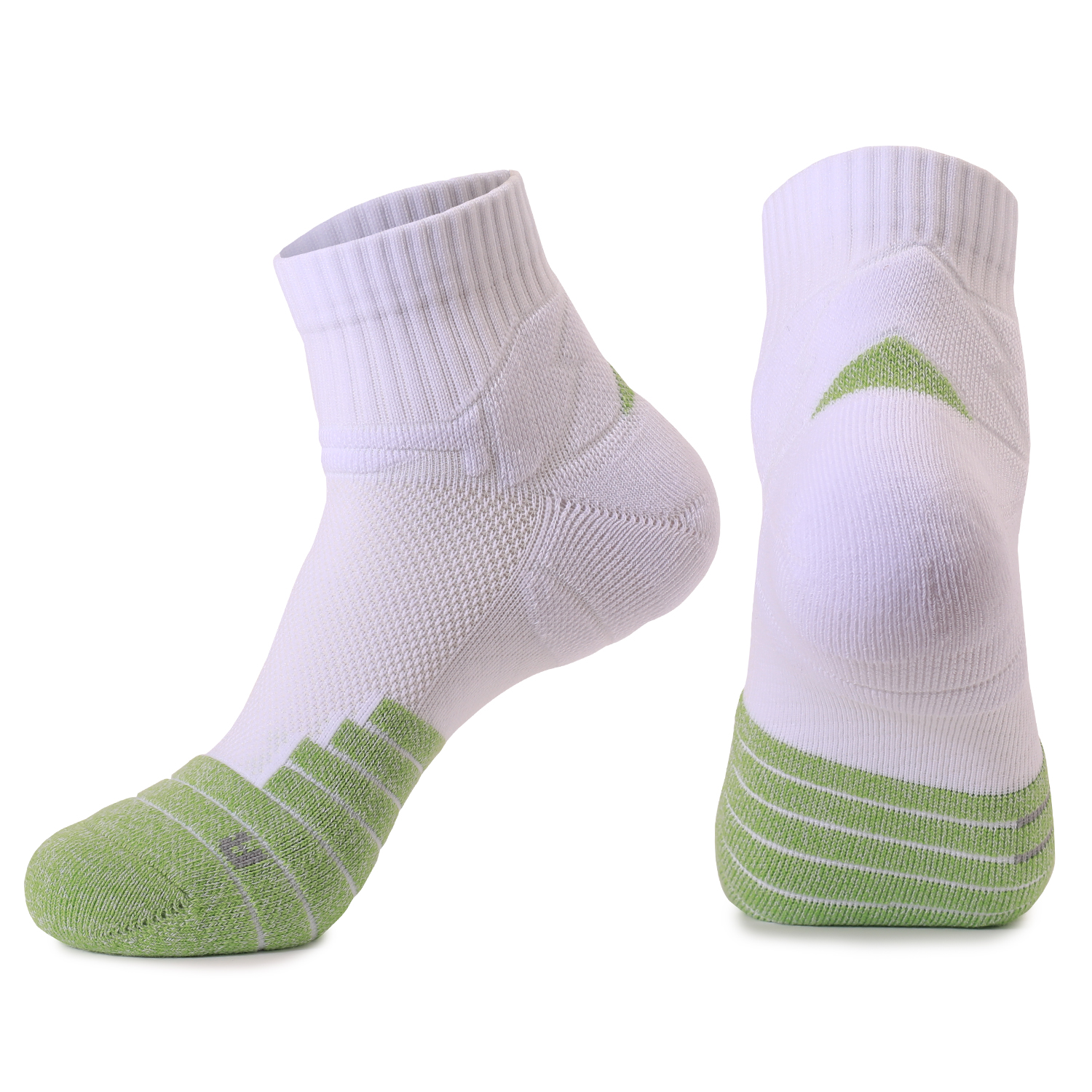
Most people judge a shoe by the logo stitched on the side. But the real work happens where your foot actually meets the ground and the fabric. Arch support isn't a marketing bullet point—it's the quiet engineering that keeps your heel from collapsing inward after a long day on concrete. Without a contoured footbed that respects the natural lift of the medial arch, even the most beautiful upper becomes a pain delivery system.
Then there's the toe seam, the tiny ridge that can ruin a run or a 14-hour shift. A bulky, misaligned seam presses against the distal phalanges and creates friction with every step. Thoughtful design recesses that junction or shifts it away from the widest part of the forefoot, so the sock or shoe disappears from your awareness. It's not a visible feature; it's an absence of irritation.
Logos attract the eye. Arch support and toe seams hold the body. When designers obsess over the invisible geometry under the insole and the placement of a single stitch line, they signal something rarer than brand identity—respect for the human foot in motion.
Cushioning and Breathability Tuned for Court Movement
Court movement is rarely linear. You plant, slide, recover, and launch again within seconds, so the cushioning beneath your feet has to keep up without feeling mushy. The midsole uses a firmer foam blend that compresses just enough on hard stops and then snaps back fast, helping you push into the next step rather than sinking out of it. There's a low-profile heel-to-toe transition that keeps your center of gravity stable during lateral cuts, while extra padding under the forefoot softens the impact of repeated toe-offs and jump landings.
Breathability doesn't mean stripping the upper down to a single layer of mesh and calling it a day. The zones are mapped to where court players actually sweat: a denser knit around the toe cap and medial side resists toe drag and slide abrasion, while open channels run along the lateral quarter and collar to pull hot air away during baseline rallies. A perforated tongue and a moisture-wicking lining work together, so by the third set your socks aren't sticking to the insole.
Together, the underfoot response and airflow management reduce the slow-burn fatigue that can make your feet feel heavy late in a match. Instead of constantly adjusting your shoes or thinking about that hot spot on your arch, you stay lower and move earlier to the ball. It's cushioning you notice for the first ten minutes, then forget about — until the match ends and your legs don't feel like they've taken a beating.
Sampling and Prototyping Without Endless Iterations
Most teams burn weeks on prototyping cycles that could have been settled in a single afternoon. The trick isn't faster iteration—it's sharper questions. Before building anything, pin down the one assumption that would kill the idea if wrong. Then make the cheapest artifact that puts that assumption in front of a real user. A paper sketch, a clickable wireframe, a five-minute video walkthrough: all of these can expose fatal flaws before a single line of production code gets written.
Once you have that first prototype, resist the urge to polish. The goal is not to impress anyone; it's to learn whether the core value resonates. Run the test, watch what people actually do—not what they say they'd do—and then either kill the concept or refine the next prototype around the next riskiest assumption. Each round should feel almost too fast, like you're cutting corners, because you are. That's the point.
A practical rhythm is to cap every prototype at one day of effort and every debrief at fifteen minutes. If a prototype takes longer, you're probably building for approval instead of learning. If the debrief drags on, you're debating opinions instead of interpreting behavior. Keep the loop so tight that iteration stops feeling like a phase and starts feeling like a reflex. Soon you'll drop the word "endless" from the process entirely—not because you rushed, but because each round had a clear reason to exist.
Quality Checks That Stop Defects Before Packing
Inspection at the end of the line is useful, but it often means the product is already loaded into packaging before anyone notices a flaw. By shifting key checks to the stations just before packing, operators can catch everything from loose fasteners to misprinted labels while the item is still accessible. Simple tools like go/no-go gauges, torque wrenches, and visual templates take seconds to use but eliminate a large share of avoidable returns.
The most effective setups combine routine dimensional checks with a short sign-off at each pre-pack station. If a feature drifts out of tolerance, the line pauses briefly for a corrective adjustment instead of letting a full batch leave the floor. This way, the packing team handles only units that have already passed the critical steps, and the defect log stays current without turning quality into a bottleneck.
Flexible Order Minimums and Realistic Lead Times
Many suppliers quote a minimum order quantity that has little to do with what you actually need. Here, the number you hear is the number that makes sense for your production run, not an arbitrary threshold. For smaller components or seasonal items, the minimum can drop considerably, especially if you're willing to work with standard finishes or packaging. It's a conversation, not a gate.
Lead times work the same way. Instead of promising a date that gets pushed back later, we start with the actual constraints: material availability, tooling condition, and the current queue on the floor. That gives you a window you can plan around. If you need something sooner, we'll tell you what's possible without pretending that every request can be rushed.
This approach means fewer surprises. You won't be forced into a large first order just to "test" a supplier, and you won't be told a two-week lead time only to find out it was always six. Flexible minimums and honest scheduling let you manage inventory and cash flow without building in extra buffer.
FAQ
ODM stands for Original Design Manufacturer. The factory handles both design and production, so you can customize everything from yarn blends to cushioning zones without managing separate suppliers.
A mix of nylon, polyester, and elastane usually works well. Nylon resists abrasion, polyester manages moisture, and elastane keeps the sock snug around the arch and heel during quick lateral movements.
Look for targeted compression bands around the midfoot, a deep heel pocket, and silicone grips on the inside of the cuff if needed. These details stop bunching and keep the sock anchored during slides and pivots.
Not always. Too much padding can reduce court feel and make shoes feel tight. A balanced approach uses extra cushioning under the forefoot and heel, with thinner mesh zones on top for breathability.
Many factories start around 300 to 500 pairs per colorway, though some accept smaller trial runs at a higher unit cost. Always confirm whether the MOQ applies per design or per total order.
Request flat toe seams or hand-linked closures instead of standard overlock seams. Also ask for a pre-production sample and do a wear test with players before full production.
Zoned ventilation, arch support bands, blister-resistant yarns, and reflective details for early morning play. Small upgrades like left/right specific construction also make the product feel more premium.
After sample approval, expect roughly 30 to 45 days for production, plus shipping time. Custom yarn dyeing can add two to three weeks, so plan ahead for seasonal launches.
Conclusion
Getting a custom tennis sock right starts with materials that earn their place on court. A blend of nylon or polyester with cotton and a touch of elastane gives you sweat-wicking performance, resistance to heel and toe friction, and enough stretch to survive dozens of wash cycles without losing shape. But yarn choice is only part of the story. The best ODM partners dig into design details that many brands overlook: a true anatomical arch band that keeps the sock from sliding, a flat or hand-linked toe seam that removes the usual blister trigger, and cushioning mapped to where players actually load weight during lateral stops and split steps. Breathable mesh zones across the instep let heat escape without weakening the high-wear areas. When these elements are tuned together, the sock feels like a piece of equipment rather than a simple giveaway.
Prototyping shouldn’t turn into a guessing game. A capable factory starts with clear size charts, material test data, and a single reference sample, then hits a wearable prototype in one or two rounds—not half a dozen. After that, quality checks move beyond a quick glance: every batch should pass stretch-and-recovery tests, seam strength pulls, colorfastness under sweat simulation, and a final visual sweep for loose threads or misaligned logos. Order minimums matter too. Look for partners who offer realistic MOQs—somewhere in the low hundreds per design—and lead times that account for yarn sourcing, knitting, boarding, and packing without promising miracles. That balance of early clarity and honest scheduling is what separates a true development partner from a vendor that just prints your logo.
Contact Us
Contact Person: Tiga
Email: [email protected]
Tel/WhatsApp: 8613058331729
Website: https://www.china-socksfactory.com/